 USD
USD  (GBP £)


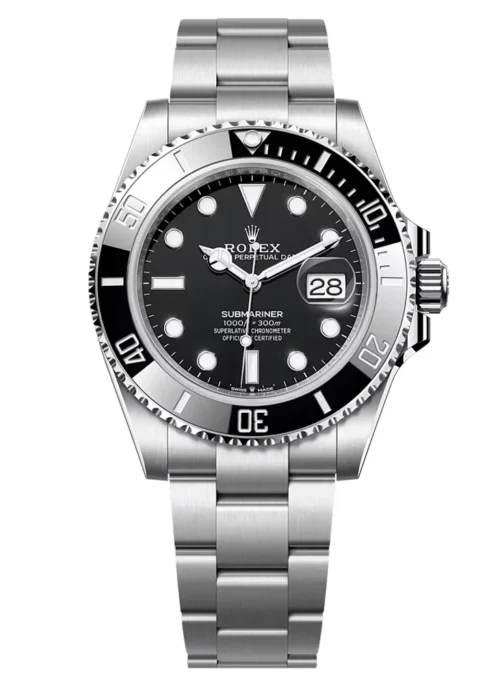
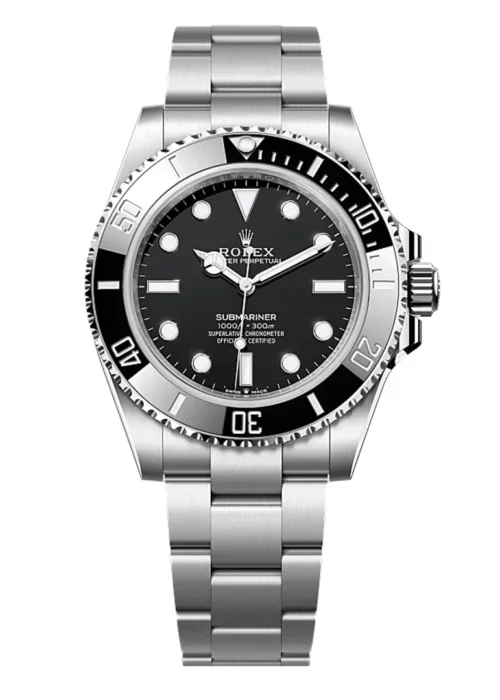
Forget gray-market premiums and multi-year waiting lists. The best luxury diver watch buying guide starts with one uncomfortable reality: a Rolex Submariner Date 126610LN retails around $10,600 and routinely trades well above that on secondary platforms, while several accessible luxury alternatives deliver 80–90% of the wearing experience for roughly $1,400–$6,000. The benchmark specification set is a 39–42mm case, 11.9–13.7mm thickness, 904L or 316L stainless steel, a flat scratch-resistant sapphire crystal, a screw-down crown, 200–300m water resistance, and a chronometer-grade automatic movement holding a 38–72-hour power reserve with real-world deviation of ±2 to ±6 seconds per day. After comparing the Submariner against the Tudor Black Bay 58, Omega Seamaster Diver 300M, Oris Aquis Date, and Longines HydroConquest, our verdict is direct: you do not need Rolex money to own a serious luxury dive watch.
What Are the Key Specifications and Dimensions of the Best Luxury Diver Watches?
Spec sheets separate engineering from marketing. The references that repeatedly surface in any serious best luxury diver watch buying guide share a narrow dimensional band: a 39–42mm diameter that fits most wrists, a sub-14mm thickness that slides under a cuff, and a lug-to-lug span between 47mm and 50mm for balanced wrist presence. Below is a verified comparison of five benchmark references, drawn from manufacturer data sheets and enthusiast measurement threads.
| Specification | Rolex Submariner 126610 | Tudor Black Bay 58 | Omega Seamaster Diver 300M | Oris Aquis Date | Longines HydroConquest |
|---|---|---|---|---|---|
| Case Diameter | 41mm | 39mm | 42mm | 41.5mm | 41mm |
| Thickness | 12.3mm | 11.9mm | 13.7mm | 12.4mm | 11.9mm |
| Case Material | 904L Oystersteel | 316L steel | 316L steel | 316L steel | 316L steel |
| Crystal | Sapphire | Sapphire | Sapphire | Sapphire | Sapphire |
| Movement | Caliber 3235 | MT5402 | Caliber 8800 | Oris 733 | L888.4 |
| Power Reserve | 70h | 70h | 55h | 38h | 72h |
| Water Resistance | 300m | 200m | 300m | 300m | 300m |
| Accuracy | ±2 sec/day | -2/+4 sec/day | 0/+5 sec/day | -5/+15 sec/day | -4/+6 sec/day |
Note the telling gap: the Submariner’s 904L stainless steel is measurably more corrosion-resistant than the 316L steel used by most alternatives, but that advantage is invisible in daily wear and only matters in aggressive marine or chemical environments. For desk divers, 316L is perfectly adequate.
How Does Craftsmanship and Aesthetics Hold Up in Daily Wear?
Dial Architecture and Hand Finishing
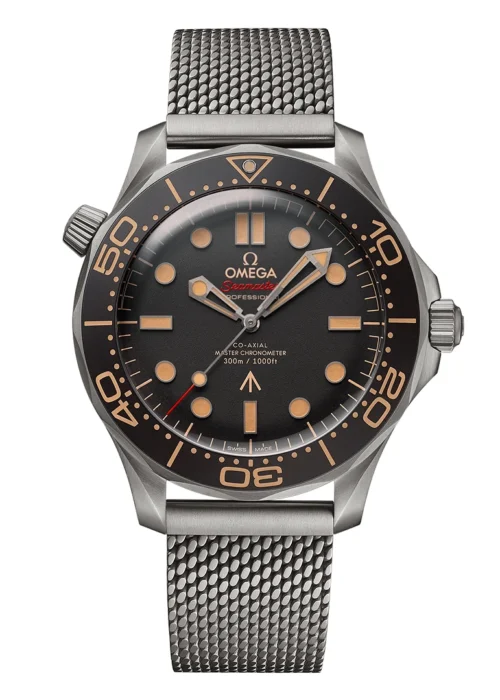
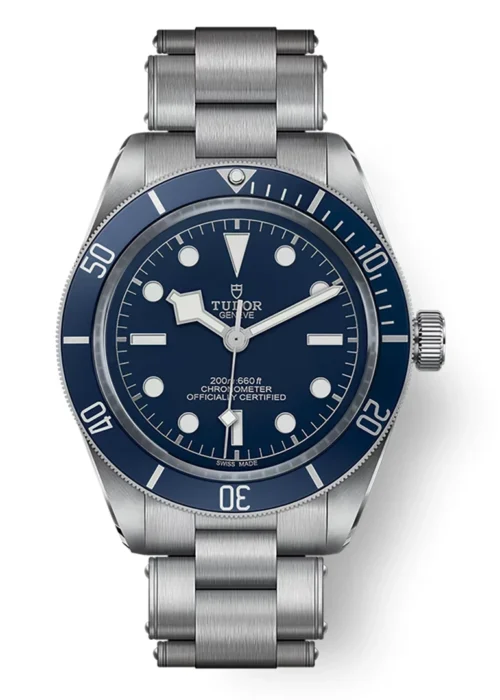
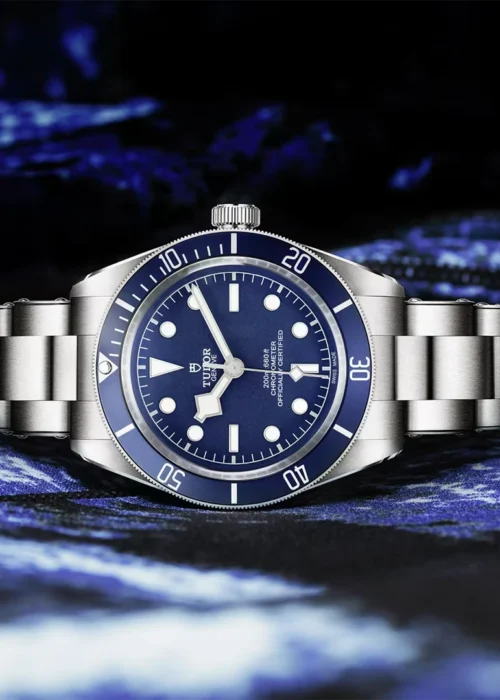
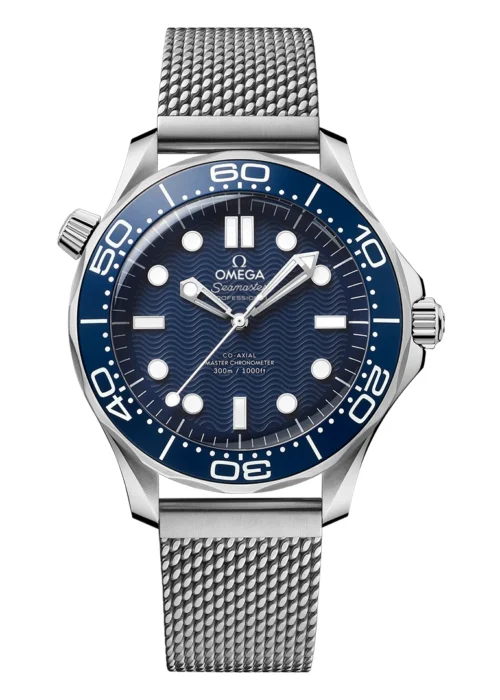
The Submariner’s gloss black dial with white-gold surrounds remains the reference standard, but the alternatives are closer than forum purists admit. The Tudor Black Bay 58 uses a matte black or blue dial with applied gilt markers and a domed sapphire crystal that warms the entire presentation. The Omega Seamaster Diver 300M counters with a laser-ablated ceramic wave dial and rhodium-plated skeleton hands — busier, but technically superior in low-light legibility. Under a 10x loupe, the Rolex still wins on index alignment and hand polish, yet the gap between a $4,000 Tudor and a $12,000 Submariner is far narrower than the price spread suggests.
Case Finishing and Bezel Action in the Field
Case work is where accessible luxury alternatives have improved most over the past decade. The Submariner alternates brushed lugs with polished case flanks; the Black Bay 58 mirrors that exact language with crisp transitions and tighter crown guards. Bezel action tells you more than specs: Rolex uses a 60-click unidirectional ceramic insert with a heavy, muted detent, while Omega’s 120-click ceramic bezel on the Seamaster feels lighter and more precise. The Oris Aquis also uses a 120-click ceramic bezel, though its screw-down crown is slightly stiffer. None of these feel cheap; they simply feel different.
Bracelet Ergonomics and Wearing Comfort Compared
The Submariner’s Oyster bracelet with Glidelock extension is still the best clasp in the segment, full stop. That said, Tudor’s rivet-style bracelet on the Black Bay 58 offers a reassuring taper from 20mm to 16mm and a T-fit clasp on newer references. Omega’s bracelet is the heaviest here and can feel top-heavy on smaller wrists, while Oris’s integrated-style lugs make strap changes a proprietary affair. If comfort is your priority over brand cachet, the Tudor wears closer to the Submariner than anything else at roughly half the price.
Is the Automatic Movement Reliable for Daily Winding and Operation?
Every watch in this guide runs on an in-house or heavily modified automatic movement, and all are robust enough for daily winding and wear. The Submariner’s Caliber 3235 delivers a 70-hour power reserve with a ±2 seconds/day chronometer rating and a paramagnetic blue Parachrom hairspring that shrugs off everyday magnetism. Tudor’s MT5402 matches the 70-hour reserve with a silicon balance spring and a -2/+4 seconds/day tolerance. Omega’s Co-Axial Caliber 8800 is METAS Master Chronometer certified, meaning it passed testing for 15,000 gauss magnetic resistance — arguably the most technically advanced movement here despite its shorter 55-hour reserve. The Oris 733 (based on the Sellita SW200-1) is the utilitarian outlier: 38 hours of reserve and broader accuracy tolerances, but inexpensive to service almost anywhere. The Longines L888.4 offers a silicon hairspring and a genuine 72-hour reserve for under $2,000, which is exceptional value.
Real-world wearers on WatchUSeek and Reddit consistently report the Tudor and Omega running within 1–3 seconds per day after regulation; the Oris tends to run 5–10 seconds fast, which is within specification but noticeable.
What Is the Value Proposition as an Accessible Luxury Alternative?
The honest math favors the alternatives. A Submariner Date at retail is already a stretch, and secondary-market premiums routinely push final prices 30–50% over list. By contrast, the Tudor Black Bay 58 trades near $3,700–$4,200, the Omega Seamaster Diver 300M near $4,500–$5,500 on bracelet, the Oris Aquis Date near $2,000–$2,600, and the Longines HydroConquest near $1,400–$1,900. You are paying for a name, a slightly better clasp, and marginally superior finishing — not for a fundamentally different product. For buyers who want genuine horological substance without the status tax, these references represent the strongest accessible luxury alternatives in the segment. For a complete side-by-side view of what is currently in stock, explore the full luxury mechanical watch lineup here.
What Are the Pros and Cons of Submariner Alternatives?
Pros
- Genuine automatic movements with 38–72-hour power reserves and chronometer-grade accuracy.
- Sapphire crystal, ceramic bezel inserts, and 200–300m water resistance at a fraction of Submariner pricing.
- Distinctive design language — the Black Bay 58 and Seamaster are icons in their own right, not anonymous copies.
- Far better availability, with no waitlists or gray-market premiums.
- Lower service costs and broader independent watchmaker support for ETA/Sellita-based calibers.
Cons
- No 904L stainless steel on most alternatives (316L is standard) and slightly simpler clasp mechanisms.
- Resale value retention is weaker than Rolex; expect 20–35% depreciation on most non-Rolex references.
- The Oris 733’s 38-hour power reserve and wider accuracy window feel dated next to 70-hour rivals.
- Brand prestige and social recognition are lower, which matters if status is part of your purchase motivation.
Final Verdict: Who Should Buy a Luxury Diver Watch Alternative?
Our overall score for the best luxury diver watch buying guide: 8.6/10. The Submariner remains the technical benchmark, but today’s alternatives deliver 85–90% of its substance at 30–50% of its street price. Buy the Tudor Black Bay 58 if you want the closest wearing experience to a vintage Submariner; buy the Omega Seamaster Diver 300M if you prize movement technology and magnetic resistance; buy the Oris Aquis if you want a rugged, service-friendly daily tool; buy the Longines HydroConquest if you want maximum mechanical value under $2,000. Skip the alternatives only if brand recognition or long-term value retention is non-negotiable — in that case, the Rolex premium is defensible.
Editorial Disclaimer
This evaluation is an independent editorial assessment based on manufacturer specifications, publicly available pricing data, and enthusiast community wear reports. Prices fluctuate with market conditions and availability. To review current inventory and specifications for the models discussed, browse the luxury mechanical watches collection here. We may earn a commission on qualifying purchases, at no additional cost to you.
Data Sources & References
- Rolex Submariner 126610LN — official technical specifications (Rolex.com)
- Tudor Black Bay 58 — official technical specifications (TudorWatch.com)
- Omega Seamaster Diver 300M — official technical specifications (OmegaWatches.com)
- Oris Aquis Date — official technical specifications (Oris.ch)
- Longines HydroConquest — official technical specifications (Longines.com)
- Chrono24 — secondary-market price ranges for the Submariner, Black Bay 58, Seamaster Diver 300M, Aquis, and HydroConquest (Chrono24.com)
- WatchUSeek and Reddit r/Watches — owner-reported accuracy and wearing-comfort threads