 USD
 (GBP £)


In the arena of modern horology, deciding between the Rolex Submariner vs Omega Seamaster comes down to balancing classic architectural refinement against cutting-edge technical specification. While the Rolex Submariner 126610LN sets the benchmark in 41mm case ergonomics, market liquidity, and timeless aesthetic retention, the Omega Seamaster Diver 300M delivers exceptional magnetic resistance up to 15,000 gauss via its METAS-certified Co-Axial 8800 movement at a substantially lower barrier to entry. For collectors evaluating daily wearability, movement reliability, and raw horological craftsmanship, both timepieces represent the absolute peak of modern steel dive watch engineering—though their value propositions cater to distinct collector mentalities.
Quick Comparison Matrix: Rolex Submariner vs Omega Seamaster
| Specification / Feature | Rolex Submariner 126610LN | Omega Seamaster Diver 300M | Strategic Advantage |
|---|---|---|---|
| Case Diameter & Thickness | 41.0 mm x 12.3 mm | 42.0 mm x 13.6 mm | Submariner (Slimmer wrist profile) |
| Case & Bracelet Metallurgy | 904L Oystersteel | 316L Stainless Steel | Submariner (Superior corrosion resistance) |
| Bezel Technology | Cerachrom bezel (Ceramic) | Ceramic with enamel scale | Tie (Both offer supreme scratch resistance) |
| Movement Architecture | Rolex Calibre 3235 | Co-Axial Calibre 8800 | Seamaster (Friction-reducing Co-Axial escapement) |
| Testing & Certification | Superlative Chronometer (±2 sec/day) | METAS Master Chronometer (0/+5 sec/day) | Seamaster (Rigorously audited by independent agency) |
| Power Reserve | 70 Hours | 55 Hours | Submariner (+15 hours additional reserve) |
| Magnetic Resistance | Parachrom hairspring (~1,000 gauss) | > 15,000 Gauss | Seamaster (Virtually immune to magnetic fields) |
| Micro-Adjustment Clasp | Glidelock System (20mm range) | Push-button rack-and-pusher | Submariner (Seamless toolless adjustment) |
| Water Resistance Rating | 300m / 1,000ft | 300m / 1,000ft with Helium Valve | Seamaster (Dedicated deep-sea saturation feature) |
Round 1: Design Architecture, Aesthetics, and Wrist Presence
Exterior Craftsmanship and Material Build
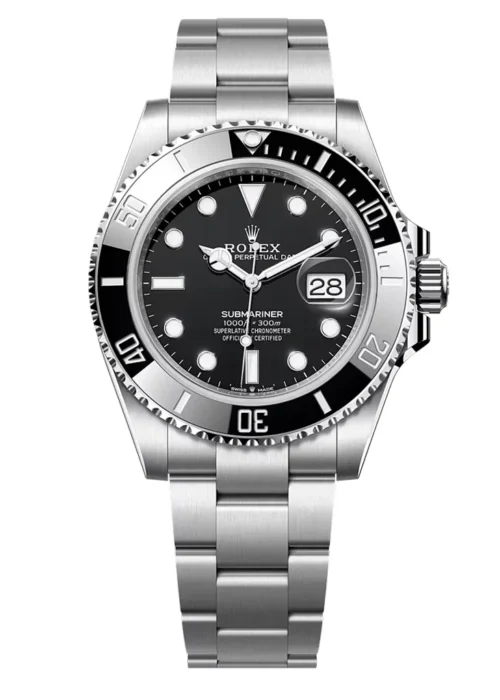
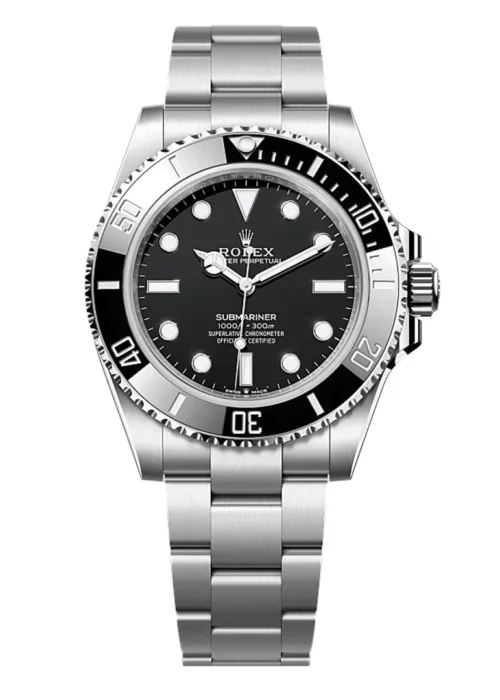
When analyzing the Rolex Submariner vs Omega Seamaster sizing, case architecture plays a fundamental role in how each watch wears on a daily basis. The Submariner 126610LN utilizes a redesigned 41mm case featuring slimmer, tapered lugs compared to its predecessor (the 116610LN “Super Case”). Machined from high-grade 904L Oystersteel, its metallurgical composition contains higher levels of chromium, molybdenum, and nickel, granting extraordinary resistance to harsh saltwater environments and producing an unmistakable brilliant luster when polished.
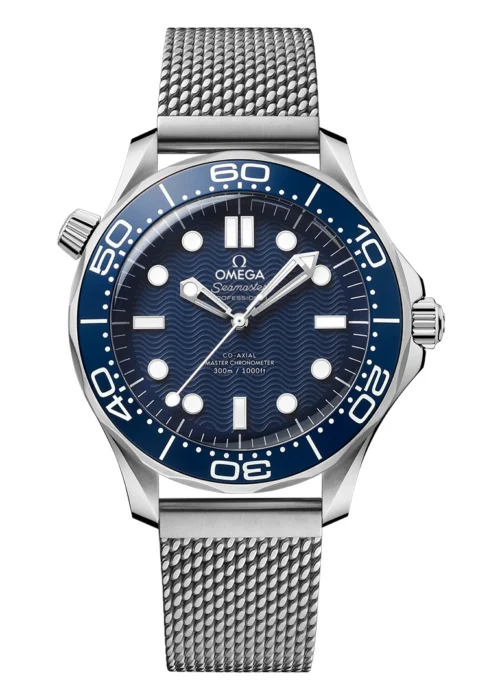
Conversely, the Omega Seamaster Diver 300M measures 42mm in diameter with a case thickness of 13.6mm. Constructed from surgical 316L stainless steel, the Seamaster commands a more assertive wrist presence. Its signature lyre lugs combine satin brushing with flowing mirror-polished bevels, delivering a dynamic interplay of light that highlights Omega’s mastery of exterior finishing.
Dial Aesthetics and On-Wrist Ergonomics
The Submariner’s dial remains the golden standard for pure utilitarian minimalism: high-contrast Maxi hour markers, clear Mercedes hand geometry, and a clean cyclops date aperture at 3 o’clock. Its blue Chromalight luminescence delivers incredible low-light legibility over long durations.
The Seamaster Diver 300M embraces artistic flair with a laser-engraved wave pattern dial crafted from solid ceramic. Paired with skeletonized sword hands and a 10 o’clock Helium Escape Valve, the Seamaster presents a bolder, more contemporary aesthetic. For collectors seeking optimized daily wearability, the Submariner’s 12.3mm profile slides effortlessly under standard shirt cuffs, whereas the Seamaster’s beefier profile offers a sportier, tool-watch stance.
Round 2: Material Build, Crystal, and Real-World Durability
Durability in high-end dive watches depends heavily on bezel composition, crystal clarity, and structural resilience. The Submariner utilizes a monobloc Cerachrom bezel crafted from extremely hard ceramic. Its numerals and graduations are recessed into the ceramic and coated with a thin PVD layer of platinum, rendering it virtually immune to scratches and ultraviolet fading.
Omega counters with its polished ceramic bezel featuring white enamel scales (or Ceragold on precious metal variants), delivering exceptional visual depth. Both timepieces utilize flat anti-reflective sapphire crystals, though Omega applies AR coating on both inner and outer surfaces for crystal-clear legibility, whereas Rolex applies AR coating primarily on the inner surface and under the cyclops lens.
For enthusiasts seeking to experience this elevated engineering without six-figure secondary market markups, exploring precision-crafted mechanical luxury dive watches allows you to enjoy 90% of the physical finishing, tactile bezel ratcheting, and steel heft at a fraction of the financial commitment.
Round 3: Movement Precision, Power Reserve, and Reliability
A thorough evaluation of movement reliability requires looking beyond marketing claims into mechanical architecture:
- Rolex Calibre 3235: Operating at 28,800 vph (4Hz), this in-house automatic movement features Rolex’s patented Chronergy escapement with a nickel-phosphorus alloy composition, alongside a blue Parachrom hairspring. Delivering an impressive 70-hour power reserve, it guarantees precision within ±2 seconds per day after casing—surpassing standard COSC metrics.
- Omega Co-Axial Calibre 8800: Operating at an unconventional frequency of 25,200 vph (3.5Hz), the Calibre 8800 utilizes George Daniels’ revolutionary Co-Axial escapement, significantly reducing sliding mechanical friction and extended service interval requirements. Passing METAS certification, it undergoes rigorous testing under 15,000 gauss magnetic fields, temperature fluctuations, and water immersion.
While Rolex leads in total power reserve (70 hours vs 55 hours), Omega dominates in magnetic resistance. Modern electronics—ranging from magnetic phone clasps to laptop speakers—frequently magnetize traditional mechanical watches. Omega’s silicon Si14 balance spring and non-ferrous movement components ensure the Seamaster remains unaffected by everyday magnetic fields.
Value Proposition: Economic Practicality for the Modern Collector
Evaluating these two titans from an economic perspective requires addressing real-world availability and value retention:
- Rolex Submariner 126610LN: Holds unprecedented market demand. While official retail pricing sits near $10,250 USD, long boutique waiting lists often push real-world procurement into secondary market premiums. Its value retention remains unrivaled, acting as a liquid store of value for luxury collectors.
- Omega Seamaster Diver 300M: Priced accessibly at roughly $5,900 USD on steel, the Seamaster offers extraordinary horological bang-for-your-buck. With METAS certification, laser ceramic work, and a Co-Axial escapement, it delivers top-tier technical performance directly off the boutique shelf without synthetic artificial waiting periods.
- The Homage / Alternative Angle: For many modern watch lovers, committing $10,000+ to a single daily tool watch creates unnecessary anxiety regarding wear, scratches, and theft. Modern homage and alternative crafted dive watches bridged this gap by offering solid 316L/904L steel cases, ceramic bezel inserts, and dependable automatic movements—providing 90% of the wrist aesthetic and tactile pleasure with zero financial stress.
Final Verdict: Which One Deserves a Spot in Your Rotation?
Choose the Rolex Submariner if:
- You prioritize timeless, classic proportions, slimmer case profile, and maximum long-term value retention.
- You require a 70-hour “weekend-proof” power reserve and the smooth micro-adjustment of the Glidelock clasp.
- You want the universal recognition of the world’s most iconic luxury dive watch signature.
Choose the Omega Seamaster (or Practical Alternatives) if:
- You value extreme magnetic resistance, anti-friction Co-Axial engineering, and transparent caseback viewings.
- You prefer a modern, textured wave dial design with punchy aesthetic personality.
- You desire maximum horological craftsmanship and daily utility without paying inflated secondary market premiums.
Call-to-Action and Inventory Direct Entry
Whether you lean toward the understated elegance of classic Oystersteel design or the technical innovation of modern ceramic wave dials, picking your next daily wrist companion should fit your lifestyle and financial goals. Ready to explore top-tier dive watch executions designed with exceptional attention to detail?
Discover our complete collection of high-performance luxury mechanical timepieces and find the perfect balance of craftsmanship, durability, and value for your wrist rotation today.
Data Sources and References
- Rolex SA Official Submariner Technical Specification Datasheet (Calibre 3235 & 904L Oystersteel specs)
- Omega SA Official Seamaster Diver 300M Master Chronometer Manual (Calibre 8800 & METAS testing protocol)
- Swiss Federal Institute of Metrology (METAS) Standard N° 115 for Master Chronometer testing
- Federation of the Swiss Watch Industry (FH) Industry Report on Metallurgy and Anti-Magnetic Horology