 USD
 (GBP £)


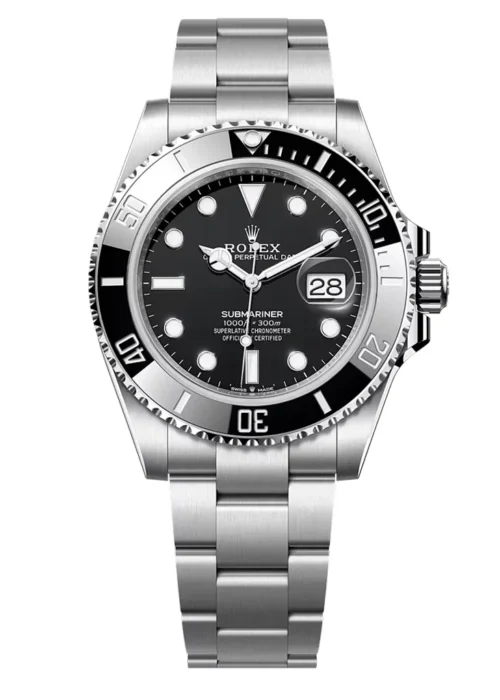
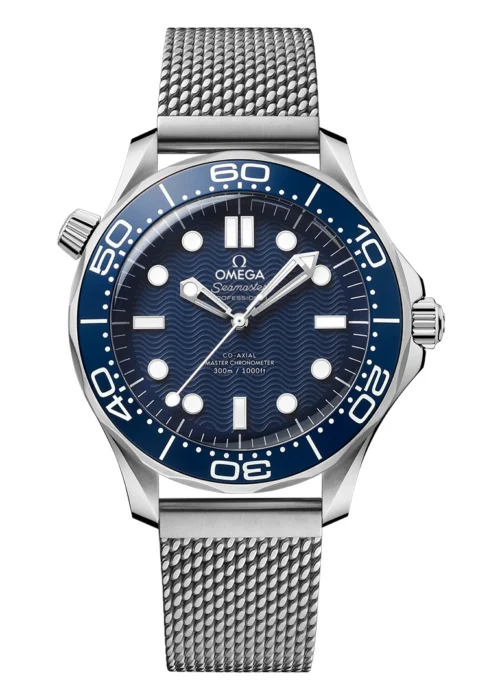
While the Rolex Submariner 126610LN dominates in case ergonomics, classic symmetry, and secondary market value retention, the Omega Seamaster Diver 300M delivers exceptional magnetic resistance, Co-Axial accuracy, and a visible caseback. This Rolex Submariner vs Omega Seamaster comparison breaks down how these titans match up in sizing, movement reliability, and daily wearability.
For decades, the luxury dive watch category has been defined by these two iconic watches. Both have deep military heritages, historic ocean-faring pedigree, and instantly recognizable designs. However, beneath the surface lies a set of distinct engineering philosophies that appeal to different facets of a collector’s mindset.
Quick Comparison Matrix: Rolex Submariner vs Omega Seamaster
| Feature / Specification | Rolex Submariner Date (126610LN) | Omega Seamaster Diver 300M | Strategic Advantage |
|---|---|---|---|
| Case Diameter | 41.0 mm | 42.0 mm | Rolex (Slimmer visual profile) |
| Thickness | 12.3 mm | 13.7 mm | Rolex (Better cuff clearance) |
| Case Material | 904L Oystersteel | 316L Stainless Steel | Rolex (Premium corrosion resistance) |
| Bezel Insert | Cerachrom bezel (Ceramic) | Ceramic bezel with White Enamel | Tie (Both scratch-impervious) |
| Escapement Type | Swiss Lever Escapement | Co-Axial Escapement | Omega (Reduced friction/maintenance) |
| Magnetic Resistance | Paramagnetic blue Parachrom | METAS certification (15,000 Gauss) | Omega (Superior anti-magnetism) |
| Power Reserve | 70 Hours | 55 Hours | Rolex (Longer weekend autonomy) |
| Water Resistance | 300 m / 1,000 ft | 300 m / 1,000 ft | Tie |
Round 1: Design Architecture, Aesthetics, and Rolex Submariner vs Omega Seamaster sizing
Exterior Craftsmanship and Material Build
The tactile experience of these watches begins with their steel alloys. Rolex famously utilizes 904L Oystersteel, a highly corrosion-resistant blend containing higher levels of chromium, molybdenum, nickel, and copper. This specific composition allows the Submariner to take on an exceptionally bright, almost warm polish that is distinct from standard steel.
In contrast, Omega uses industry-standard 316L stainless steel. While slightly less chemically resistant than 904L, 316L is highly hypoallergenic, structurally robust, and more than capable of handling saltwater environments.
The bezel execution also showcases distinct methodologies. Rolex’s Cerachrom bezel uses a patented ceramic insert where the 60-minute graduations are molded into the ceramic and coated with a micro-layer of platinum via PVD. It rotates with a legendary, crisp 120-click sensory feedback that feels like a Swiss bank vault combination lock.
Omega features a polished ceramic bezel with white enamel scales. It is exceptionally smooth to turn but exhibits a slightly heavier resistance, which some divers prefer to prevent accidental rotation. Additionally, the Seamaster includes its signature helium escape valve at the 10 o’clock position—a feature that highlights its technical saturation diving capabilities but adds a distinct asymmetrical protrusion.
Dial Aesthetics and On-Wrist Ergonomics
Evaluating the Rolex Submariner vs Omega Seamaster sizing reveals a stark difference in how they sit on the wrist.
The Rolex Submariner 126610LN, despite its official 41mm sizing, is a triumph of ergonomics. It features a lug-to-lug distance of approximately 47.6mm and a remarkably slim profile of just 12.3mm. The tapered lugs and the wider 21mm Oyster bracelet distribute the weight perfectly across the wrist, allowing the watch to slip effortlessly under a formal shirt cuff.
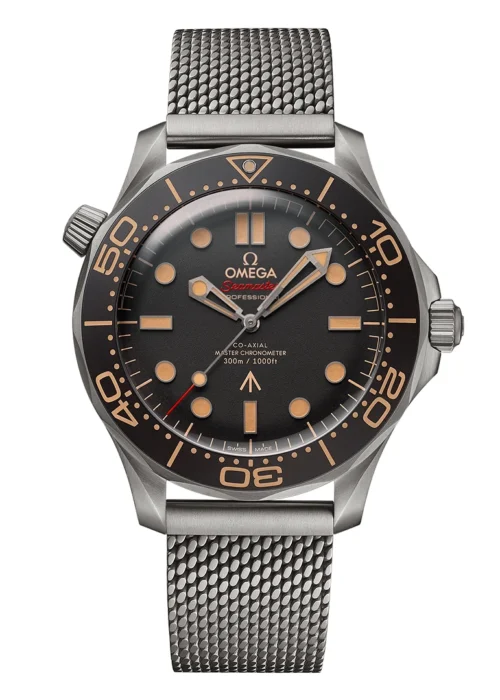
The Omega Seamaster Diver 300M is a larger, more assertive instrument. With a 42mm diameter, a thickness of 13.7mm, and a lug-to-lug measurement of nearly 50mm, it demands more wrist real estate.
On the dial side, Omega treats the collector to a laser-engraved ceramic wave dial that catches the light in a dynamic, oceanic fashion, accented by skeletonized hands. Rolex adheres to its legendary Maxi Dial layout, characterized by highly legible white-gold surrounds, oversized plots, and the iconic Mercedes hands. It is a masterclass in classic symmetry and utility.
Round 2: Material Build, Crystal, and Daily Wearability
Daily wearability is heavily influenced by crystal treatment and bracelet design. Omega utilizes a domed sapphire crystal with double-sided anti-reflective (AR) coating. This makes the crystal practically invisible under bright sunlight, highlighting the intricate ceramic wave dial. However, double-sided AR coating is susceptible to external hairline scratches on the outer layer over time.
Rolex opts for a flat sapphire crystal with AR coating applied strictly to the underside (and on the magnifying Cyclops lens). This leaves the top surface pure, highly scratch-resistant sapphire, maintaining pristine clarity even through years of intensive use.
The bracelet designs also present a clear choice:
- Rolex Oyster Bracelet: Celebrated for its three-link construction, brushed finish, and the Glidelock micro-adjustment system. This clasp allows the wearer to adjust the bracelet length in 2mm increments up to 20mm without any tools.
- Omega Five-Link Bracelet / Rubber Strap: The standard steel bracelet has a distinctive 90s aesthetic with polished accent stripes. It features a push-button micro-extension clasp. However, many enthusiasts argue that the Seamaster truly shines on its integrated rubber strap, which significantly reduces the watch’s weight and enhances its daily wearability.
For collectors who seek the immaculate physical finishing and robust engineering of these legendary designs without the multi-year waitlists or inflated secondary market markups, exploring an accessible luxury alternative can provide an incredibly satisfying entry point to premium horological ownership.
Round 3: Movement Reliability, Precision, and Power Reserve
Inside these cases beat two of the finest mass-production movements ever built by Swiss watchmakers, representing the pinnacle of mechanical timekeeping.
The Rolex Submariner houses the Calibre 3235, a self-winding movement featuring the Chronergy escapement, which improves energy efficiency by 15%. This contributes to a robust 70-hour power reserve, meaning you can take the watch off on Friday evening and put it back on Monday morning without needing to reset the time. Rolex regulates the 3235 to their “Superlative Chronometer” standard of -2/+2 seconds per day, which exceeds standard COSC expectations.
The Omega Seamaster is powered by the Co-Axial 8800. This movement features George Daniels’ famous Co-Axial escapement, which drastically reduces sliding friction between the pallet jewels and the escape wheel, extending service intervals. Furthermore, the 8800 boasts METAS certification as a Master Chronometer, guaranteeing:
- A precision standard of 0/+5 seconds per day.
- Resistance to magnetic fields up to 15,000 Gauss.
- Exceptional shock resistance and water-tight integrity.
While the Rolex Calibre 3235 wins on pure power reserve (70 hours vs 55 hours), the Omega Calibre 8800 is the clear victor in movement reliability under high magnetic exposure—a critical factor in our modern, device-heavy environment where laptops, magnetic clasps, and smartphones can easily magnetize a traditional hairspring.
Value Proposition: Economic Practicality for the Modern Collector
The economic landscape of these two timepieces is where their paths diverge most dramatically:
- Rolex Submariner 126610LN: This watch carries immense brand equity. However, purchasing one at retail (MSRP) often requires long-term relationships with Authorized Dealers or navigating multi-year waitlists. On the secondary market, it routinely commands a premium over retail, making it a highly liquid asset that holds its value exceptionally well, but at a high cost of entry.
- Omega Seamaster Diver 300M: Omega offers superior economic accessibility. It is readily available at boutiques, and can frequently be acquired with reasonable discounts on the secondary market. From a pure specifications-per-dollar standpoint, the Seamaster is widely regarded as the ultimate luxury tool watch bargain.
Final Verdict: Which One Deserves a Spot in Your Rotation?
When evaluating the Rolex Submariner vs Omega Seamaster, the decision ultimately rests on your personal style, wrist structure, and financial goals.
Three Reasons to Buy the Rolex Submariner:
- Timeless Proportion: The 41mm sizing and 12.3mm profile offer unmatched versatility across formal and casual settings.
- Financial Liquidity: It remains a gold standard for value retention in the luxury watch market.
- Classic Minimalist Design: The clean, symmetrical dial and bezel represent the absolute archetype of the modern dive watch.
Three Reasons to Buy the Omega Seamaster:
- Cutting-Edge Anti-Magnetism: The METAS-certified Co-Axial 8800 movement provides unparalleled protection against modern magnetic fields.
- Exceptional Value: It delivers elite-tier Swiss engineering and material finishes without the artificial scarcity or heavy premiums.
- Modern Dial Artistry: The ceramic wave dial offers a striking, modern aesthetic that stands out in any collection.
Call-to-Action and Inventory Direct Entry
Whether your preference leans toward the timeless prestige of the Submariner or the high-tech horology of the Seamaster, selecting a watch of this caliber is a deeply personal and rewarding decision.
For those looking to curate their collection with immaculate, highly reliable timepieces that offer top-tier build quality, materials, and daily durability, we invite you to explore our carefully curated selection of luxury mechanical watches. Find your next milestone timepiece today.
Data Sources and References
- Rolex SA, Submariner Date 126610LN Technical Specifications, Geneva, Switzerland.
- Omega SA, Seamaster Diver 300M Co-Axial Master Chronometer Technical Specifications, Biel, Switzerland.
- METAS (Federal Institute of Metrology), Swiss Master Chronometer Certification standards.
- COSC (Official Swiss Chronometer Testing Institute) testing parameters.