 USD
 (GBP £)


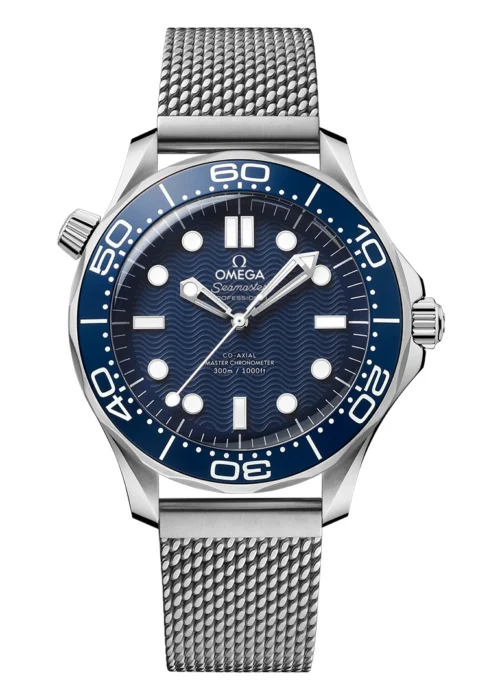
Rolex Submariner vs Omega Seamaster is a study in two divergent engineering philosophies: the Rolex Submariner 126610LN refines a 41mm 904L Oystersteel case, Cerachrom bezel, and 70-hour Calibre 3235 into a near-universal wrist benchmark, while the Omega Seamaster Diver 300M counters with a 42mm ceramic-wave dial, METAS-certified Co-Axial Calibre 8800, 15,000-gauss magnetic resistance, and a retail entry point roughly 40% more accessible.
Neither watch is objectively better; they are optimized for different collectors. This comparison breaks down sizing, movement reliability, bezel action, and daily wearability so you can decide without dealer hype.
At its core, this is a clash of restraint versus specification. Rolex evolves an icon through incremental refinement: the 126610LN slims the Maxi case lugs and upgrades to the 70-hour Calibre 3235. Omega pushes the modern dive watch forward with a Co-Axial Master Chronometer movement, a domed sapphire with dual-side anti-reflective coating, and a more expressive design language. Neither is a compromise; they simply reward different priorities.
Quick Comparison Matrix: Rolex Submariner 126610LN vs Omega Seamaster Diver 300M
| Feature / Specification | Rolex Submariner 126610LN | Omega Seamaster Diver 300M | Strategic Advantage |
|---|---|---|---|
| Case diameter | 41mm | 42mm | Rolex — wears smaller, more universal |
| Case material | 904L Oystersteel | 316L stainless steel | Rolex — higher corrosion resistance |
| Bezel insert | Cerachrom ceramic | Ceramic | Tie — both effectively scratch-proof |
| Bezel action | 120-click, firm, precise | 120-click, scalloped grip | Rolex for precision; Omega for glove use |
| Crystal | Sapphire, flat, Cyclops | Sapphire, domed, dual AR | Omega — superior clarity, fewer reflections |
| Movement | Calibre 3235 | Co-Axial Calibre 8800 | Omega — METAS certification, anti-magnetic |
| Power reserve | 70 hours | 55 hours | Rolex |
| Precision | -2/+2 sec/day (Superlative) | 0/+5 sec/day (Master Chronometer) | Tie — both excellent |
| Magnetic resistance | Not officially published | 15,000 gauss | Omega — decisive |
| Water resistance | 300m / 1,000ft | 300m / 1,000ft | Tie |
| Retail price (approx.) | $10,250 | $5,900–$6,300 | Omega — accessible entry |
| Secondary market retention | Exceptional | Moderate | Rolex |
Round 1: Design Architecture, Aesthetics, and Wrist Presence
Exterior Craftsmanship and Material Build
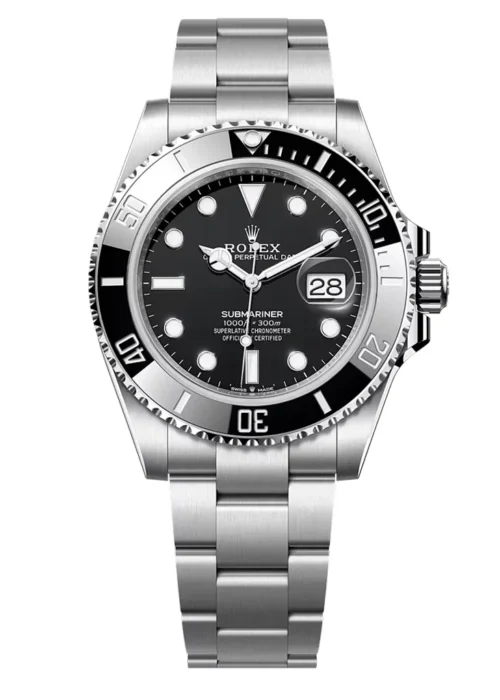
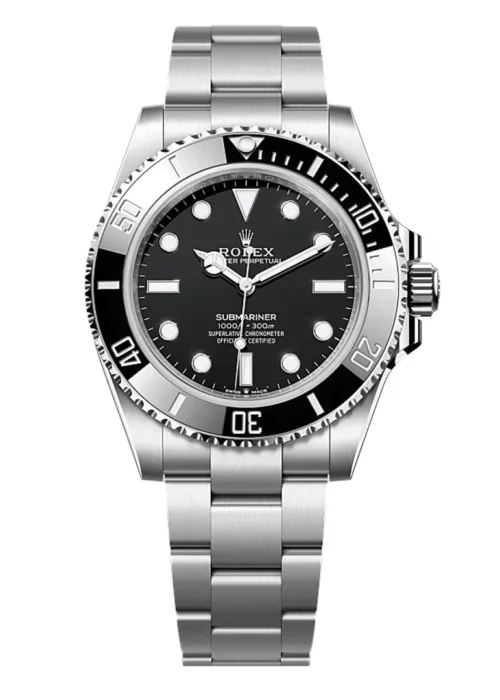
The Rolex Submariner 126610LN is the most refined iteration of the reference since 1953. Its 41mm case is machined from 904L Oystersteel, an alloy that resists corrosion better than standard 316L and takes a warmer, darker polish. The 2020-generation redesign slimmed the lugs relative to the earlier Maxi case, restoring the balanced proportions that made vintage references so wearable. Brushed case flanks, polished chamfers, and a deeply knurled crown guard communicate restraint rather than spectacle.
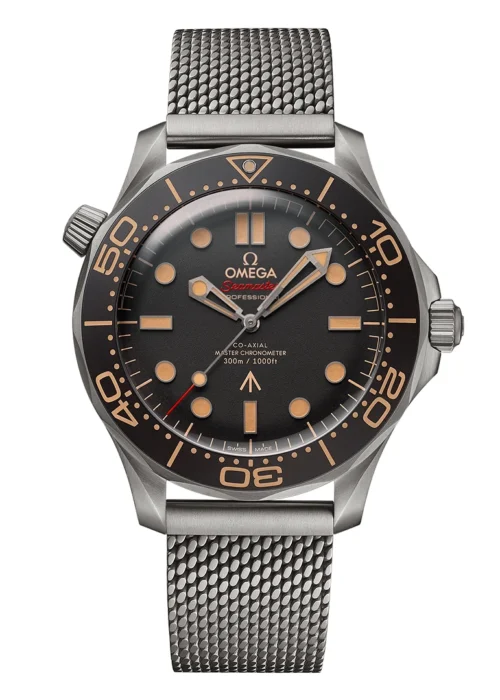
The Omega Seamaster Diver 300M is a more extroverted design. The 42mm case uses 316L stainless steel, twisted lyre lugs, and a scalloped helium escape valve at 10 o’clock. Omega’s finishing is arguably more decorative — polished bevels catch light from more angles — but the overall architecture reads as sportier and slightly more tool-like. Neither case is better in absolute terms; the Rolex is quieter, while the Omega announces itself.
Dial Aesthetics and On-Wrist Ergonomics
On the dial, the Submariner stays faithful to its DNA: a gloss black lacquer dial, Mercedes handset, white-gold-rimmed indices, and a Cyclops date at 3 o’clock. Legibility is exceptional, and the monochrome palette disappears into formal and casual settings alike. The 41mm case wears close to the wrist, and the Glidelock clasp offers tool-free micro-adjustment in 2mm increments.
The Seamaster Diver 300M offers a completely different visual texture. Its ceramic dial is laser-engraved with a wave pattern, paired with skeletonized hands and a date window at 6 o’clock. The 42mm footprint and domed crystal give it more wrist presence, which suits larger forearms but can feel tall on smaller wrists. For daily wearability, the Submariner is the more forgiving shape; the Omega rewards those who want visual drama.
Round 2: Material Build, Crystal, and Real-World Durability
Both watches use sapphire crystals, but the execution diverges. The Submariner’s crystal is flat and, outside the Cyclops magnifier, relatively uncoated — which preserves Rolex’s signature glossy look but produces occasional glare. The Seamaster uses a domed sapphire with anti-reflective treatment on both surfaces, delivering visibly better clarity in bright sunlight and underwater.
In steel selection, the 904L Oystersteel of the Rolex is objectively harder to machine and more corrosion-resistant than the Omega’s 316L. That said, 316L remains a proven marine-grade alloy, and Omega’s bracelet — while polarizing in its 1990s-inspired link design — is solidly built with a push-button micro-adjust clasp on current references. The Cerachrom bezel on the Submariner and the ceramic bezel on the Seamaster are both effectively scratch-proof, though the Rolex’s firmer 120-click detents feel more precise, while Omega’s scalloped edge is easier to rotate with dive gloves.
For collectors who want to evaluate the Submariner’s Cerachrom bezel action, 904L Oystersteel finishing, and bracelet ergonomics against other high-grade mechanical divers before committing, our luxury mechanical watches collection provides a focused reference point for side-by-side craftsmanship evaluation.
Round 3: Movement Precision, Power Reserve, and Reliability
The Rolex Calibre 3235 is the company’s modern workhorse: a Superlative Chronometer rated at -2/+2 seconds per day, with a 70-hour power reserve, Chronergy escapement, Parachrom hairspring, and Paraflex shock absorbers. It has been in serial production since 2015, and its long-term service intervals and parts availability are among the best in the industry. The Parachrom hairspring is paramagnetic, but Rolex does not publish an official gauss rating for the Submariner.
The Omega Co-Axial Calibre 8800 is certified as a Master Chronometer under the METAS standard, meaning each movement is tested for precision (0/+5 seconds per day), water resistance, power reserve, and — critically — magnetic resistance up to 15,000 gauss. Its silicon balance spring and co-axial escapement reduce friction and lubrication needs. At 55 hours, its power reserve trails the Rolex, but the magnetic resistance advantage is meaningful for anyone who works near laptops, speakers, or medical equipment.
On movement reliability, the 3235 has the longer real-world track record, while the 8800 has the stronger modern specification. Both are in-house, both are serviceable by competent watchmakers, and both will comfortably outlast their first owner when maintained properly.
Value Proposition: Economic Practicality for the Modern Collector
This is where the comparison sharpens. The Rolex Submariner 126610LN retails around $10,250 and is typically allocation-limited at authorized dealers; secondary market prices have historically floated above retail. It is, by any measure, a store of value as much as a timepiece.
The Omega Seamaster Diver 300M retails between roughly $5,900 and $6,300, is broadly available, and often trades at a modest discount. It delivers the majority of the real-world diving specification — 300m water resistance, ceramic bezel, sapphire crystal, in-house chronometer movement — for roughly 60% of the Rolex’s entry price. For collectors who want 90% of the daily wrist experience and finishing quality at a fraction of the financial pressure, a well-executed accessible luxury alternative in the same mechanical diving family can be the more rational first acquisition; the Rolex remains the asset-grade endgame.
Final Verdict: Which One Deserves a Spot in Your Rotation?
Choose the Rolex Submariner 126610LN if you want the most refined case ergonomics in the category, the corrosion-resistant 904L Oystersteel and Cerachrom bezel, a 70-hour power reserve, and exceptional value retention. Three reasons: timeless proportions that survive trends, benchmark build quality, and asset-grade resale behavior.
Choose the Omega Seamaster Diver 300M if you want METAS-certified magnetic resistance, a more accessible retail entry point, and a more expressive modern design. Three reasons: 15,000-gauss anti-magnetism, honest availability at or below retail, and dial presence that the Rolex deliberately avoids.
There is no wrong answer in Rolex Submariner vs Omega Seamaster — only a wrong fit for your wrist and your priorities.
Call-to-Action and Inventory Direct Entry
Whether you gravitate toward the Submariner’s restrained perfection or the Seamaster’s specification-led value, the next step is to handle comparable high-grade mechanical divers in person. Browse our luxury mechanical watches collection to cross-reference case finishing, bezel action, and bracelet ergonomics before you commit.
Data Sources and References
- Rolex official specifications: Submariner 126610LN — 41mm 904L Oystersteel case, Calibre 3235, 70-hour power reserve, Superlative Chronometer -2/+2 sec/day.
- Omega official specifications: Seamaster Diver 300M — 42mm case, Co-Axial Master Chronometer Calibre 8800, METAS certification, 15,000 gauss magnetic resistance, 55-hour power reserve.
- METAS Master Chronometer certification standard, Federal Institute of Metrology (Switzerland).
- Industry forum and owner-reported data on long-term Calibre 3235 and Calibre 8800 service behavior (Watchuseek, Omega Forums, Rolex Forums).
- Retail price observations from authorized dealer listings and secondary market aggregators (2024–2025).