 USD
 (GBP £)


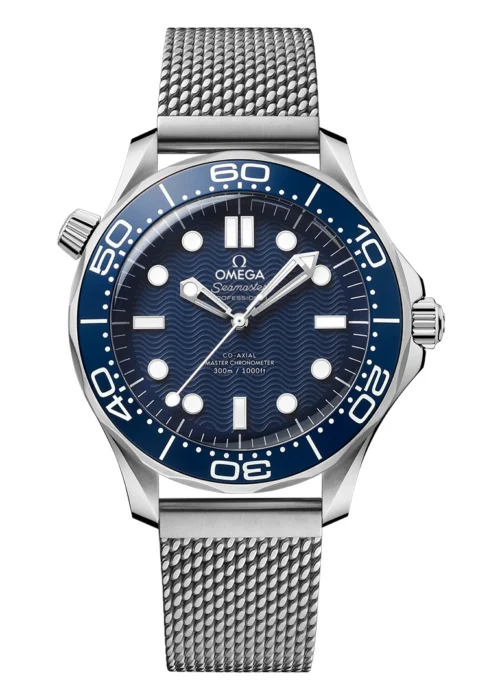
While the Rolex Submariner 126610LN dominates in secondary market value retention, case ergonomics, and timeless wearability, the Omega Seamaster Diver 300M offers superior magnetic resistance, Co-Axial 8800 METAS certification, and exceptional value at a more accessible entry price. When analyzing Rolex Submariner vs Omega Seamaster, the choice boils down to Rolex’s unmatched daily wearability and prestige against Omega’s state-of-the-art movement reliability and robust 42mm sizing. For collectors demanding the apex of dive watch engineering, both models represent the absolute pinnacle of luxury steel sport watches.
Quick Comparison Matrix: Rolex Submariner vs Omega Seamaster
| Feature / Specification | Rolex Submariner 126610LN | Omega Seamaster Diver 300M Co-Axial | Strategic Advantage |
|---|---|---|---|
| Case Diameter | 41.0 mm | 42.0 mm | Omega (Bold wrist presence) / Rolex (Ergonomic slimness) |
| Case Thickness | 12.3 mm | 13.6 mm | Rolex (Sleekness under cuffs) |
| Case Material | 904L Oystersteel | 316L Stainless Steel | Rolex (Corrosion resistance & high-gloss polish) |
| Bezel Technology | Cerachrom bezel (Ceramic) | Ceramic with white enamel scale | Tie (Both highly scratch-resistant) |
| Calibre / Movement | Calibre 3235 (In-House) | Calibre 8800 (Co-Axial) | Omega (Inherent anti-magnetism & co-axial reliability) |
| Power Reserve | 70 Hours | 55 Hours | Rolex (Weekend-proof reserve) |
| Anti-Magnetism | Paramagnetic blue Parachrom hairspring | 15,000 Gauss (METAS) | Omega (Industry-leading magnetic resistance) |
| Water Resistance | 300 meters (1,000 ft) | 300 meters (1,000 ft) | Tie |
| Micro-Adjustment | Glidelock Clasp (20mm range) | Rack-and-Push Clasp (9.6mm range) | Rolex (Superior fine-tuning precision) |
Round 1: Design Architecture, Aesthetics, and Wrist Presence
Exterior Craftsmanship and Material Build
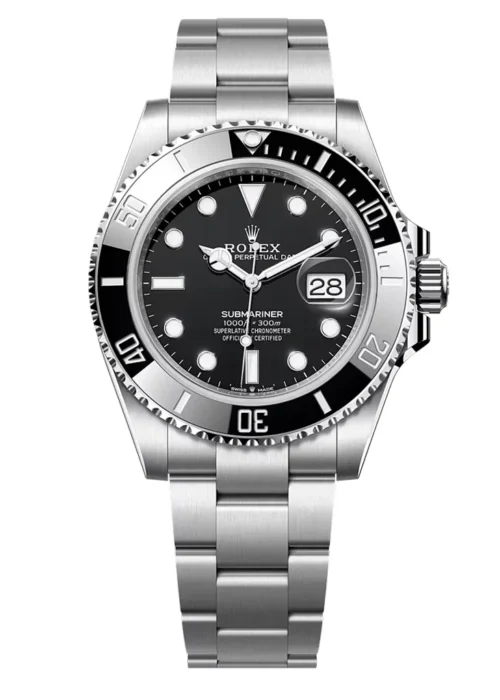
The battle of materials in the luxury dive watch segment is fought in microns and proprietary metallurgy. The Rolex Submariner utilizes 904L Oystersteel, a superalloy primarily reserved for aerospace and chemical industries due to its high molybdenum content. This specific alloy resists pitting and corrosion under severe marine environments better than standard steel, and it polishes to an exceptionally bright, white luster.
In contrast, the Omega Seamaster Diver 300M relies on industry-standard, high-grade 316L stainless steel. While slightly less chemically inert than 904L, 316L is exceptionally robust and hypoallergenic. Omega makes up for this with intricate case geometry: lyre-shaped lugs and a distinct alternating brushed-and-polished finish that catches the light dynamically. However, the Seamaster’s integrated manual Helium Escape Valve at 10 o’clock remains a polarizing visual signature—essential for saturation divers, but a protrusion that breaks the symmetrical silhouette preferred by purists.
Dial Aesthetics and On-Wrist Ergonomics
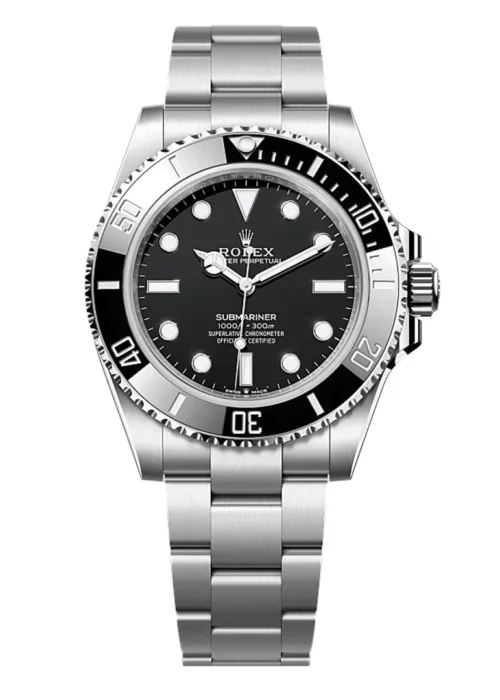
When comparing Rolex Submariner vs Omega Seamaster sizing, the structural ergonomics define the real-world wearing experience. Rolex updated the Submariner to 41mm in 2020, yet slimmed down the lugs to maintain a balanced profile. With a thickness of just 12.3mm and a compact 47.6mm lug-to-lug, the Submariner hugs the wrist gracefully, offering superb daily wearability.
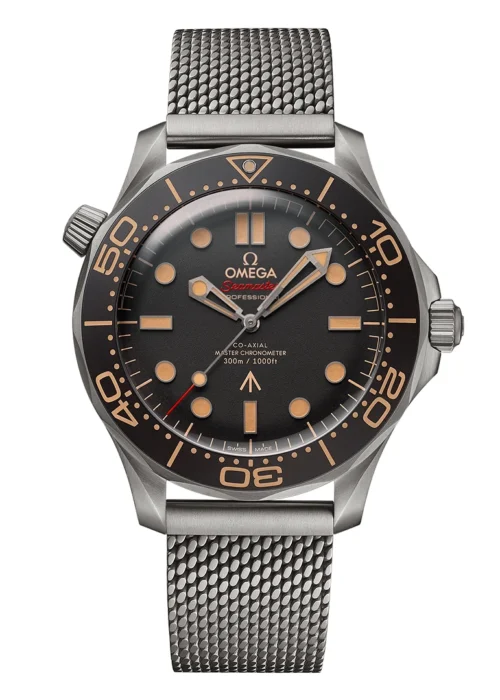
The Seamaster Diver 300M presents a bolder, more technical footprint on the wrist. It measures 42mm in diameter, 13.6mm in thickness, and features a lug-to-lug span of 50mm. The dial is a masterpiece of modern watchmaking, showcasing laser-engraved waves on polished ceramic (ZrO2) that offer incredible depth. However, because of its thicker profile and flat caseback, it sits taller on the wrist, making it feel distinctly more like an instrument and less like a versatile dress-diver.
Round 2: Material Build, Crystal, and Real-World Durability
To truly assess real-world durability, one must look at how these watches handle everyday impacts. The bezel is the most exposed component of a dive watch. Rolex’s proprietary Cerachrom bezel features insert numerals and graduations coated in a micro-layer of platinum via Physical Vapor Deposition (PVD). The 120-click unidirectional rotation is crisp, mechanical, and operates with a satisfying, high-frequency auditory click that feels like turning the dial on a Swiss bank vault.
The Seamaster utilizes a polished ceramic bezel insert with white enamel graduations, which promises long-term color stability. However, the scalloped bezel edge of the Seamaster can be notoriously difficult to grip with wet fingers or gloves compared to the knurled edge of the Submariner.
On the front side, the sapphire crystals diverge in philosophy. Rolex uses a flat sapphire crystal with anti-reflective coating only on the inner side, keeping the exterior scratch-resistant while highlighting the iconic Cyclops magnifier over the date. For those looking to invest in this standard of horological engineering, the Rolex Submariner 126610LN represents the gold standard of robust case design and everyday luxury. Omega, by contrast, applies double-sided anti-reflective coating to the Seamaster’s crystal. This makes the glass virtually disappear under direct sunlight, but the outer AR coating remains susceptible to micro-scratches over years of active wear.
Round 3: Movement Precision, Power Reserve, and Reliability
Precision and Certification Standards
Behind the solid steel casebacks lies the true technological divide between these two powerhouses. Rolex equips the Submariner with the in-house Calibre 3235, which features the Chronergy escapement. Certified as a Superlative Chronometer, Rolex guarantees an exceptional precision of -2/+2 seconds per day after casing.
The Omega Seamaster 300M is powered by the Co-Axial 8800 movement, a caliber that is certified by METAS as a Master Chronometer. This METAS certification requires the movement and the fully assembled watch to pass rigorous testing for precision (0/+5 seconds per day), water resistance, and shock resistance under intense magnetic fields.
Power Reserve and Magnetic Resistance
While Rolex delivers a weekend-proof 70-hour power reserve compared to Omega’s 55 hours, Omega claims a definitive victory in magnetic resistance. Modern environments are saturated with invisible magnetic fields from laptops, smartphones, and magnetic clasps. Rolex uses a paramagnetic blue Parachrom hairspring, which offers respectable shielding.
However, Omega’s Calibre 8800 is constructed using non-ferrous materials (including a silicon Si14 balance spring), allowing it to withstand fields up to 15,000 gauss without requiring a heavy soft-iron inner cage. In terms of modern movement reliability under electronic exposure, the Omega Co-Axial architecture is practically bulletproof.
Value Proposition: Economic Practicality for the Modern Collector
Evaluating these watches requires a pragmatic look at market dynamics. The Omega Seamaster Diver 300M represents one of the greatest value propositions in modern luxury watchmaking. It offers high-end ceramic engineering, a revolutionary Co-Axial movement, and a rich history for a fraction of the cost of its competitor. It is readily available at authorized dealers without artificial waitlists, serving as an exceptional accessible luxury alternative for buyers who judge a watch purely by its specifications.
The Rolex Submariner 126610LN, conversely, commands a premium. While its retail price is higher, its secondary market value is incredibly resilient, often trading above MSRP. From an economic standpoint, the Submariner is less of an outright purchase and more of an asset class, making it the preferred choice for collectors who prioritize capital preservation alongside mechanical enjoyment.
Final Verdict: Which One Deserves a Spot in Your Rotation?
Ultimately, the choice between the Rolex Submariner vs Omega Seamaster depends on your personal lifestyle, wrist size, and appreciation for specific engineering philosophies.
Buy the Rolex Submariner 126610LN if:
- You prioritize optimal ergonomics: The slim 12.3mm profile and tapered Oyster bracelet provide unmatched wearing comfort.
- You seek maximum value retention: The Submariner remains one of the safest financial harbors in the watch collecting world.
- You prefer a timeless, versatile aesthetic: The clean, symmetrical design transitions seamlessly from a wetsuit to a tailored tuxedo.
Buy the Omega Seamaster Diver 300M if:
- You demand state-of-the-art technology: The METAS-certified Co-Axial 8800 offers unparalleled resistance to magnetic fields and everyday shocks.
- You want a bold, contemporary design: The laser-etched wave dial and skeleton hands make a distinct, modern horological statement.
- You appreciate exceptional cost-to-performance value: It offers 90% of the mechanical prestige and build quality of the Submariner at a far more rational price point.
Call-to-Action and Inventory Direct Entry
Whether you are drawn to the classic lines of the Submariner or the technical dominance of the Seamaster, both watches represent the absolute peak of modern diving heritage. To explore our hand-curated selection of premium timepieces and find your next mechanical companion, explore our extensive Luxury Mechanical Watches Collection today.
Data Sources and References
- Official Rolex Technical Specifications for Submariner Ref. 126610LN.
- Official Omega Specifications and METAS Testing Procedures for the Seamaster Diver 300M.
- Contrasting study of 904L vs 316L steel in marine and industrial environments, published by the International Molybdenum Association.
- COSC (Official Swiss Chronometer Testing Institute) precision standards data.