 USD
USD  (GBP £)


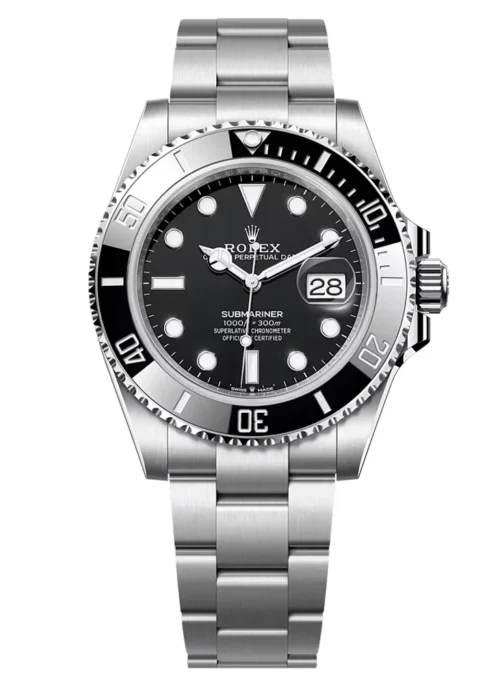
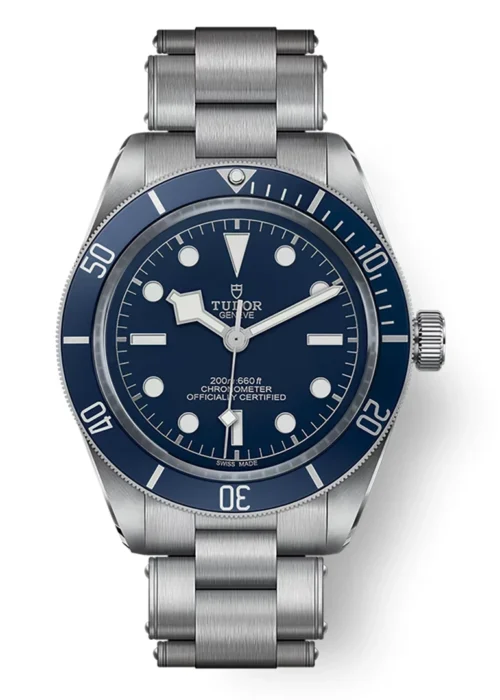
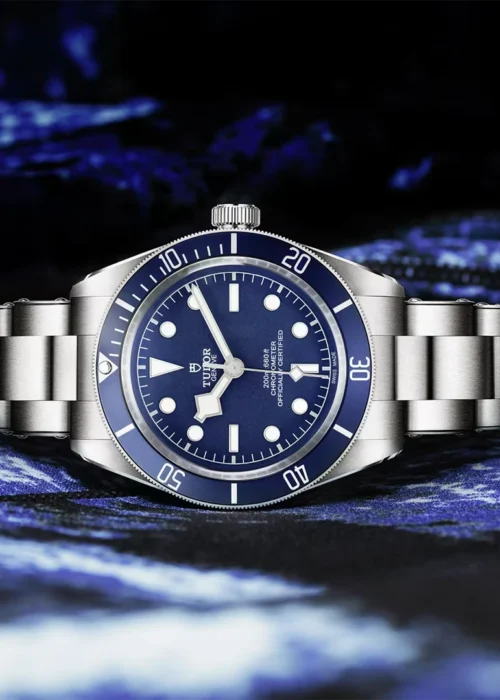
The Rolex Submariner Date 126610LN is still the benchmark, but this best luxury diver watch buying guide makes one point clear: today’s accessible luxury alternatives deliver roughly 90% of the Submariner’s wearing experience at a fraction of the cost. The Submariner measures 41mm in diameter and 12.0mm thick, is machined from 904L Oystersteel, runs on the automatic Calibre 3235 with a 70-hour power reserve, is regulated to ±2 seconds per day, and offers 300m of water resistance beneath a sapphire crystal—yet it now trades between $13,000 and $15,000 on the secondary market versus a $10,250 retail price. By contrast, the Tudor Black Bay 58 gives you a 39mm, 11.9mm 316L steel case, the COSC-certified automatic MT5402 with the same 70-hour power reserve, 200m water resistance, and a domed sapphire crystal for approximately $4,100. A full-bracelet Submariner weighs around 155 grams; the Black Bay 58 sits closer to 130 grams. That price-to-capability gap is why this category exists.
What Are the Key Specifications and Dimensions of the Submariner and Its Accessible Alternatives?
Specifications are the objective foundation of any buying decision. The table below compares the genuine Rolex reference against four credible accessible luxury alternatives on the metrics that actually matter: case dimensions, automatic movement architecture, power reserve, water resistance, crystal type, and price.
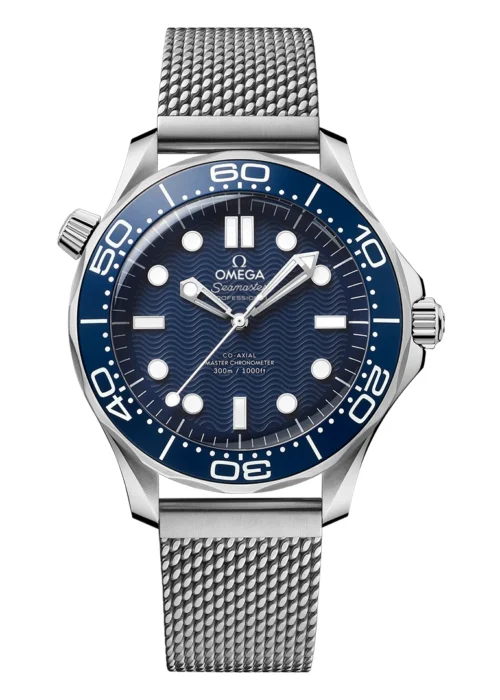
| Specification | Rolex Submariner Date 126610LN | Tudor Black Bay 58 | Oris Aquis Date 41.5 | Omega Seamaster Diver 300M | Longines HydroConquest 41 |
|---|---|---|---|---|---|
| Case diameter | 41mm | 39mm | 41.5mm | 42mm | 41mm |
| Thickness | ≈12.0mm | 11.9mm | ≈12.7mm | ≈13.7mm | ≈11.9mm |
| Case material | 904L Oystersteel | 316L stainless steel | 316L stainless steel | 316L stainless steel | 316L stainless steel |
| Automatic movement | Calibre 3235 | MT5402 (COSC) | Oris 733 (Sellita base) | Calibre 8800 (METAS) | L888.5 |
| Power reserve | 70 hours | 70 hours | 38 hours | 55 hours | 72 hours |
| Accuracy | ±2 sec/day | -4/+6 sec/day (COSC) | Standard grade | 0/+5 sec/day (METAS) | COSC-level |
| Water resistance | 300m | 200m | 300m | 300m | 300m |
| Crystal | Sapphire + cyclops | Domed sapphire | Sapphire, AR-coated | Domed sapphire | Sapphire |
| Approx. price | $10,250 retail | ≈$4,100 | ≈$2,400 | ≈$6,000 | ≈$1,675 |
A few patterns are immediately clear. Every watch here pairs an automatic movement with a sapphire crystal and at least 200m of water resistance, so none of the alternatives is a capability compromise. The real trade-offs are material (904L Oystersteel only on the Rolex), reserve (the Oris 733’s 38 hours), and price.
How Do Craftsmanship and Aesthetics Perform in Daily Wear?
Specifications only tell part of the story. The practical differences between a $10,000 Rolex and its accessible luxury alternatives surface in hand-finished details, bezel feel, and bracelet comfort.
Dial Structure and Hand Finishing
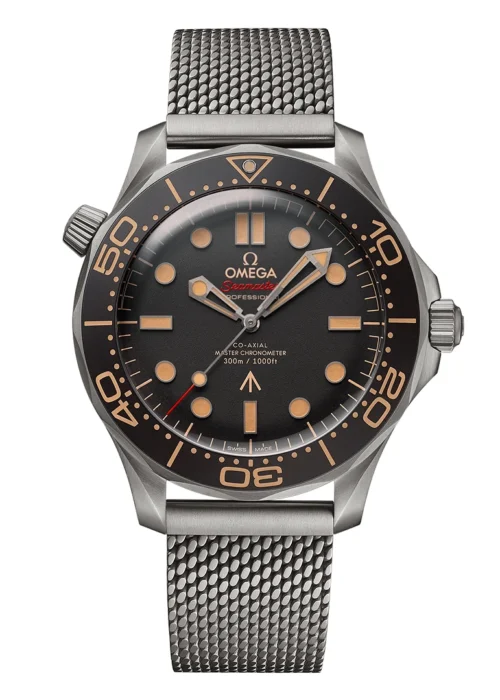
The Submariner’s dial is the reference point: applied 18k white-gold indices, a gloss black lacquer or sunburst finish, and Chromalight lume that glows bright blue for hours. The Tudor Black Bay 58 swaps modern gloss for vintage warmth—gilt-toned markers, a slightly domed dial, and green-glowing Super-LumiNova that community owners describe as less intense than Rolex Chromalight but perfectly legible. The Omega Seamaster Diver 300M uses laser-engraved ceramic wave dials with rhodium-plated indices and Super-LumiNova; the Oris Aquis and Longines HydroConquest both offer deep sunray dials with applied markers, though their lume plots are smaller and their hand finishing is a half-step below Tudor. None of these feel like a downgrade; the differences are in refinement, not competence.
Case Finishing and Bezel Action in the Field
Rolex’s 904L Oystersteel is slightly harder and takes a brighter polish than the 316L steel used by Tudor, Oris, Longines, and Omega—in practice, the Submariner’s brushed top surfaces and polished flanks look more “wet” in direct light. Bezel action is where the Submariner wins decisively: its 120-click Cerachrom ceramic bezel is crisp, virtually backlash-free, and machined to exacting tolerances. The Black Bay 58’s aluminum insert is charmingly vintage but scratches more easily than ceramic, and owners on forums note its bezel action, while solid, has a touch more play than Rolex’s ratchet. The Omega’s scalloped ceramic bezel is easier to grip with gloves; the Longines and Oris ceramic inserts are modern and durable, though their click feel is lighter.
Bracelet Ergonomics and Wearing Comfort Compared
The Submariner’s Oyster bracelet remains the gold standard, thanks largely to the Glidelock clasp with 20mm of tool-free extension; a full-bracelet example weighs approximately 155 grams and disappears on a balanced wrist. The Black Bay 58 is the comfort champion among the alternatives: at roughly 130 grams fully linked and 39mm across, it wears smaller than its dimensions suggest. Newer BB58 examples ship with Tudor’s T-fit tool-free clasp, while earlier examples use a three-hole micro-adjust system that is competent but less convenient. The Aquis has integrated lugs that make strap changes proprietary; the HydroConquest’s clasp is its weakest point—serviceable but less refined than the others here.
Is the Automatic Movement Reliable for Daily Winding and Wear?
The short answer is yes—and the gap between these calibres is smaller than the price tags imply. The Rolex Calibre 3235 uses a Chronergy escapement, Parachrom hairspring, and Paraflex shock absorbers, delivering 70 hours of power reserve and ±2 sec/day regulation; early 3235 examples (2017–2019) drew forum complaints about declining amplitude, but later units have settled into consistent timekeeping. The Tudor MT5402 is arguably the most underrated engine here: a COSC-certified automatic movement with a silicon balance spring, 70-hour reserve, and community-reported real-world accuracy of +1 to +3 sec/day. Omega’s Calibre 8800 is METAS-certified to 0/+5 sec/day and is antimagnetic to 15,000 gauss—the most technically resistant of the group. The Longines L888.5 offers a genuine 72-hour reserve at an entry-luxury price, while the Oris 733’s 38-hour reserve is the only genuine shortcoming: take it off Friday evening and it will need a wind by Sunday morning.
What Is the Value Proposition as an Accessible Luxury Alternative?
This is where the buying guide gets practical. A Rolex Submariner Date at $10,250 retail—and $13,000–$15,000 pre-owned—is not an “accessible” purchase for most collectors, and the waitlist reality makes the secondary premium feel permanent. The accessible luxury alternatives reviewed above cover every sensible tier: the Longines HydroConquest (≈$1,675) is the entry point for a genuine 300m automatic dive watch with sapphire crystal and a 72-hour reserve; the Oris Aquis (≈$2,400) adds a more distinctive integrated design; the Tudor Black Bay 58 (≈$4,100) is the closest spiritual successor to the vintage Submariner; and the Omega Seamaster Diver 300M (≈$6,000) is a legitimate technical rival at roughly half the Submariner’s pre-owned price. For most buyers, the value proposition is simple: you sacrifice brand equity, 904L steel, and the Glidelock clasp—not core capability. If you are comparing models across these tiers, browse the full luxury mechanical watch collection here to see current inventory and pricing.
What Are the Pros and Cons of These Submariner Alternatives?
Pros:
- Genuine Swiss automatic movements with 55–72 hour power reserves across all tiers
- Sapphire crystal and 200–300m water resistance on every model reviewed
- COSC/METAS-certified accuracy on the Tudor, Longines, and Omega
- 40–85% below Rolex retail with no waitlist or pre-owned premium
- Serviceable, widely supported movements (ETA/Sellita bases and manufacture calibres)
Cons:
- No 904L Oystersteel outside the Rolex—all alternatives use 316L stainless steel
- Aluminum bezel inserts on the Black Bay 58 scratch more readily than ceramic
- The Oris 733’s 38-hour power reserve trails every rival here
- Clasp and micro-adjust quality varies: the HydroConquest and early BB58 clasps are functional but less refined
- Resale value drops harder on the secondary market than a Rolex
Final Verdict: Who Should Buy These Watches?
Score: 8.8/10. If you want the single best luxury diver watch buying guide takeaway, it is this: the Submariner remains the reference, but it is no longer the only rational answer. Buy the Rolex Submariner if you want maximum brand equity, 904L Oystersteel, Chromalight lume, the Glidelock clasp, and strong value retention. Buy the Tudor Black Bay 58 if you want the vintage Submariner spirit with a modern automatic movement and 70-hour reserve at a third of the price. Choose the Omega Seamaster Diver 300M for METAS-certified precision and 15,000-gauss antimagnetic resistance; choose the Oris Aquis or Longines HydroConquest for a genuinely accessible luxury alternative under $2,500. In every case, you are getting sapphire crystal, automatic movement, and real dive-ready water resistance—not a compromise in capability, only in badge.
Editorial Disclaimer: This evaluation is an independent craftsmanship assessment based on publicly available specifications, official brand documentation, and long-term owner reports from enthusiast communities. Watches were not provided by any manufacturer for this review. Pricing reflects approximate retail and secondary-market figures at the time of writing and may vary by region and availability. If you are ready to compare current stock, explore the luxury mechanical watch collection to view detailed listings, specifications, and pricing.
Data Sources & References
- Rolex Submariner Date 126610LN official specifications — rolex.com
- Tudor Black Bay 58 (M79030N) official specifications — tudorwatch.com
- Oris Aquis Date official specifications — oris.ch
- Omega Seamaster Diver 300M official specifications — omegawatches.com
- Longines HydroConquest official specifications — longines.com
- Secondary-market price observations — chrono24.com
- Owner accuracy and comfort reports — watchuseek.com and reddit.com/r/Watches