 USD
USD  (GBP £)


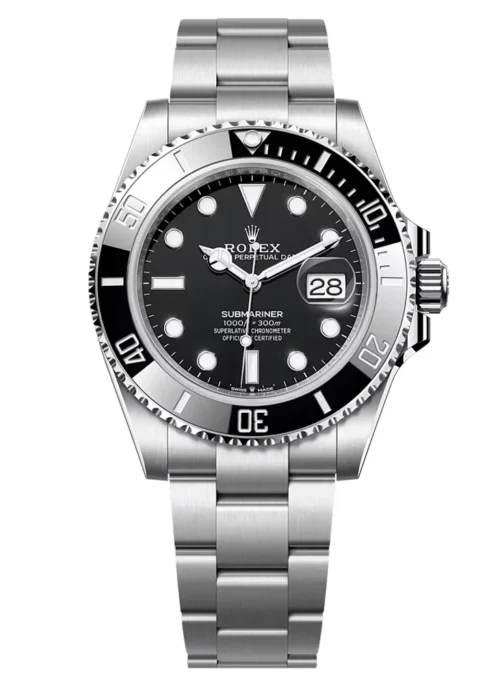
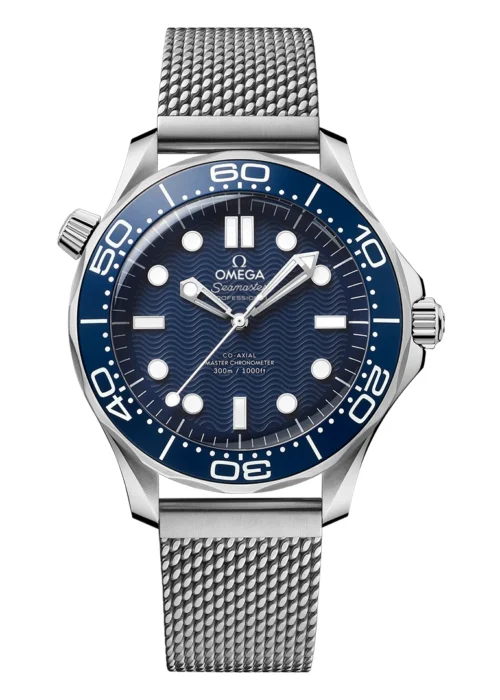
While the Rolex Submariner 126610LN dominates in secondary market liquidity, icon status, and slim profile ergonomics, the Omega Seamaster Diver 300M offers unmatched technical value with its METAS-certified Co-Axial 8800 movement and 15,000 Gauss magnetic resistance at nearly half the retail investment. Evaluating Rolex Submariner vs Omega Seamaster requires weighing 41mm 904L Oystersteel architecture against 42mm laser-engraved ceramic craftsmanship. The Submariner features Rolex’s proprietary Cerachrom bezel and 70-hour Calibre 3235, while the Seamaster counters with a signature helium escape valve and superior anti-magnetic shielding. For collectors seeking maximum horological engineering per dollar, the Seamaster presents a compelling case, whereas the Submariner remains the quintessential luxury benchmark for long-term value retention.
Quick Comparison Matrix: Rolex Submariner 126610LN vs Omega Seamaster Diver 300M
| Feature / Specification | Rolex Submariner Date 126610LN | Omega Seamaster Diver 300M | Strategic Advantage |
|---|---|---|---|
| Case Diameter | 41 mm | 42 mm | Rolex (Slightly sleeker wrist presence) |
| Case Thickness | 12.3 mm | 13.6 mm | Rolex (Superior cuff clearance) |
| Lug-to-Lug Distance | 47.6 mm | 50 mm | Rolex (More versatile fit for all wrists) |
| Case Material | 904L Oystersteel | 316L Stainless Steel | Rolex (Higher corrosion resistance & luster) |
| Bezel Insert | Cerachrom Ceramic | Laser-Engraved Ceramic | Tie (Both scratch-proof and UV-proof) |
| Movement Architecture | Calibre 3235 (In-house) | Co-Axial Master Chronometer Calibre 8800 | Omega (Superior anti-magnetic engineering) |
| Accuracy Certification | Superlative Chronometer (-2/+2 sec/day) | METAS Master Chronometer (0/+5 sec/day) | Omega (Rigorous 8-step independent testing) |
| Magnetic Resistance | Paramagnetic blue Parachrom hairspring | > 15,000 Gauss | Omega (Industry-leading magnetic immunity) |
| Power Reserve | 70 Hours | 55 Hours | Rolex (Weekend-proof power reserve) |
| Water Resistance | 300 m / 1000 ft | 300 m / 1000 ft | Tie (ISO 6425 dive compliant) |
| Bracelet / Clasp System | Oysterlock with Glidelock (20mm tool-free) | Push-button rack-and-pinion extension | Rolex (Finer micro-adjustment range) |
| MSRP / Access Entry | ~$10,250 (High market premium) | ~$5,900 (Accessible luxury entry) | Omega (Unbeatable value proposition) |
Round 1: Which Case Design and Ergonomics Offer Better Wrist Presence?
Exterior Craftsmanship and Material Build
The battle between these two titans begins at the metallurgic level. Rolex utilizes proprietary 904L Oystersteel, an alloy containing elevated amounts of nickel, chromium, molybdenum, and copper. This blend grants the Submariner exceptional resistance to harsh chemical corrosion and a distinctive, high-luster sheen when polished. In contrast, Omega employs high-grade surgical 316L stainless steel for the Seamaster Diver 300M, decorated with brushed surfaces accented by dramatic polished twisted lyre lugs.
Regarding bezel technology, Rolex’s Cerachrom bezel features platinum PVD-filled recessed numerals, yielding an understated, ultra-durable timing ring with smooth 120-click unidirectional rotation. Omega responds with a ceramic bezel ring featuring white enamel or Ceragold scales, surrounding a laser-etched wave pattern dial crafted from zirconium oxide ceramic ($\text{ZrO}_2$). While the Submariner exudes classic, clinical luxury, the Seamaster presents a bolder visual texture that catches dynamic ambient light.
Dial Aesthetics and On-Wrist Ergonomics
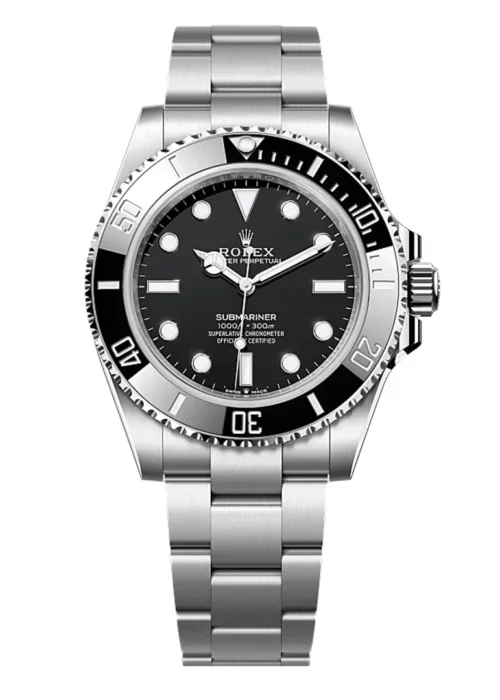
When comparing Rolex Submariner vs Omega Seamaster sizing, dimensions play a vital role in long-term wearability. The Submariner 126610LN sports a trimmed 41mm case diameter, a compact 47.6mm lug-to-lug, and a slim 12.3mm thickness. This architectural restraint ensures exceptional daily wearability, allowing the watch to transition effortlessly from a wet suit sleeve to a tailored dress shirt cuff.
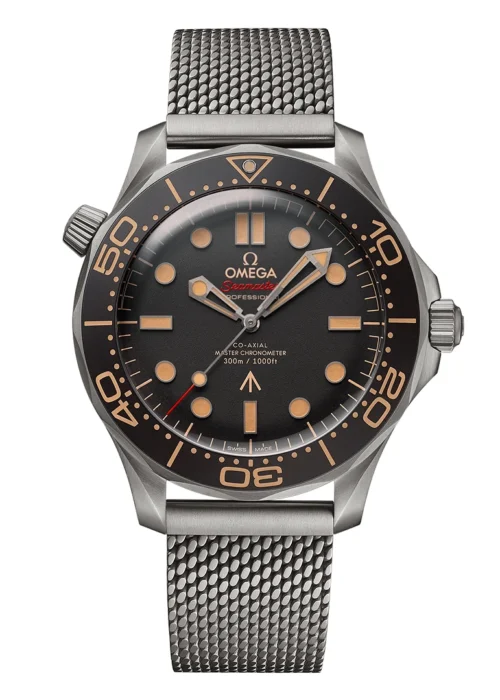
The Omega Seamaster Diver 300M expands to a 42mm case with a 50mm lug-to-lug span and a 13.6mm height. Coupled with its signature skeleton hands and manual helium escape valve at 10 o’clock, the Seamaster commands a broader, more muscular stance on the wrist. For collectors with wrists under 6.5 inches, the Submariner’s refined proportions offer a more tailored contour, whereas larger wrists appreciate the robust stance of the Seamaster.
Round 2: How Do Material Build, Crystal Clarity, and Real-World Durability Compare?
Durability in luxury dive watches depends on sapphire crystal execution, crown sealing, and clasp mechanics. Rolex applies anti-reflective coating exclusively to the inner surface of the crystal and Cyclops magnification lens, preserving crystal clarity while shielding the exterior from potential AR-coating scratches. Omega applies double-sided anti-reflective treatment, achieving an almost invisible glass effect under bright direct sunlight, though the outer coating can show faint hairline marks over years of hard utility.
The tactical tactile feedback of the bezel system also highlights distinct engineering philosophies. Rolex’s sub-surface spring mechanism yields a authoritative, crisp 120-click click-feel with zero backplay. Omega’s scalloped 120-click bezel offers high tactile grip even with neoprene gloves, though its smooth dampening feels slightly softer underhand.
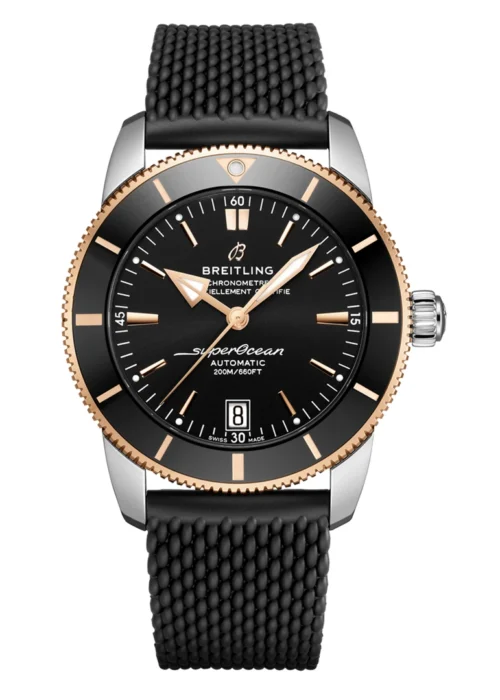
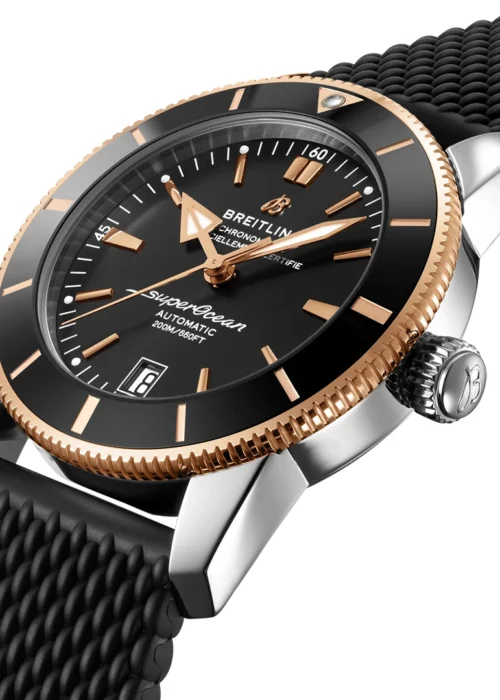
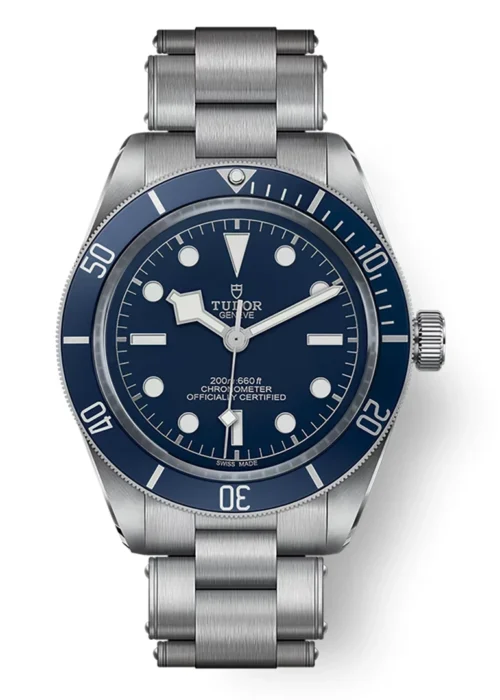
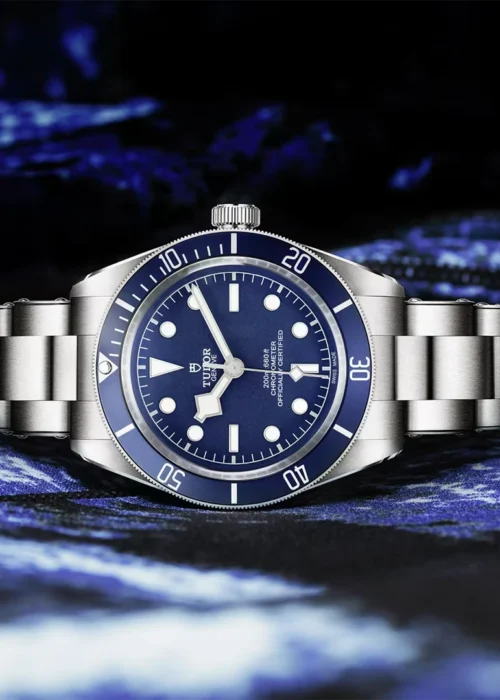
For collectors who desire high-grade finishing, technical robustness, and authentic tool-watch heritage without navigating secondary market waiting lists, evaluating luxury dive watch construction—such as the refined finishing found on this luxury dive watch specification—demonstrates how modern horological finishing standards are executed across top-tier Swiss-inspired designs.
Round 3: Which Movement Delivers Superior Precision, Power Reserve, and Reliability?
Evaluating movement reliability reveals two distinct masterclasses in contemporary horological engineering.
The Rolex Submariner 126610LN houses the in-house Calibre 3235, equipped with the high-efficiency Chronergy escapement and a paramagnetic blue Parachrom hairspring. Operating at 28,800 vph (4 Hz), it delivers an impressive 70-hour power reserve. Rolex certifies the movement under its internal Superlative Chronometer standard, guaranteeing an extraordinary precision rating of -2/+2 seconds per day after casing.
Omega powers the Seamaster Diver 300M with the Co-Axial Master Chronometer Calibre 8800. Operating at an unconventional frequency of 25,200 vph (3.5 Hz), it utilizes George Daniels’ friction-free Co-Axial escapement paired with a free-sprung silicon balance spring. The movement undergoes rigorous METAS certification, testing function under intense magnetic resistance up to 15,000 Gauss. While the Calibre 8800 offers a shorter 55-hour power reserve compared to Rolex’s 70 hours, its total immunity to daily magnetic interference from smartphones, laptops, and magnetic clasps provides unrivaled operational peace of mind.
Value Proposition: What Is the Economic Practicality for the Modern Collector?
From a pure financial perspective, comparing Rolex Submariner vs Omega Seamaster involves distinct market dynamics:
- Market Value & Liquidity: The Submariner carries an MSRP around $10,250, but high demand often leads to boutique waitlists or gray market premiums. Its strength lies in secondary market liquidity and value retention.
- Technical Value Ratio: The Seamaster carries an MSRP around $5,900. It provides METAS certification, an exhibition sapphire caseback, laser-etched ceramic dial detailing, and high magnetic resistance at nearly half the financial barrier of entry.
For the practical collector who prioritizes 90% of physical luxury finishing, structural mass, and mechanical accuracy without allocation friction, the Seamaster offers an extraordinary ratio of performance per dollar.
Final Verdict: Which One Deserves a Spot in Your Rotation?
Choose the Rolex Submariner 126610LN if:
- You seek the definitive, timeless luxury dive watch icon with maximum brand recognition and secondary market value retention.
- You prefer sleeker case proportions (12.3mm profile, 47.6mm lug-to-lug) for effortless formal and casual integration.
- You require a 70-hour “weekend-proof” power reserve and prefer a clean dial without an exterior helium valve.
Choose the Omega Seamaster Diver 300M (or Accessible Luxury Alternatives) if:
- You prioritize real-world technical features like 15,000 Gauss magnetic resistance and METAS Master Chronometer validation.
- You favor a dynamic visual design with laser-engraved ceramic wave dials and an exhibition sapphire caseback to admire movement decoration.
- You demand unbeatable value for money, securing elite Swiss dive watch performance at a rational, accessible price point.
Call-to-Action and Inventory Direct Entry
Both timepieces represent the pinnacle of modern mechanical diving heritage. Whether you lean toward the clinical precision and status of the Submariner or the technical innovation and value of the Seamaster, making an informed choice comes down to personal wrist preference, budget allocation, and desired feature set.
To examine our full selection of high-grade mechanical dive watches, compare technical specifications, and discover exceptional timepieces tailored to your personal taste, explore our luxury mechanical watches collection.
Data Sources and References
- Official Rolex Submariner 126610LN Technical Manual (Rolex SA)
- Official Omega Seamaster Diver 300M Co-Axial Master Chronometer Guide (Omega SA)
- METAS (Swiss Federal Institute of Metrology) Certification Standards & Testing Criteria
- ISO 6425 International Standard for Diving Watches Specification