 USD
USD  (GBP £)


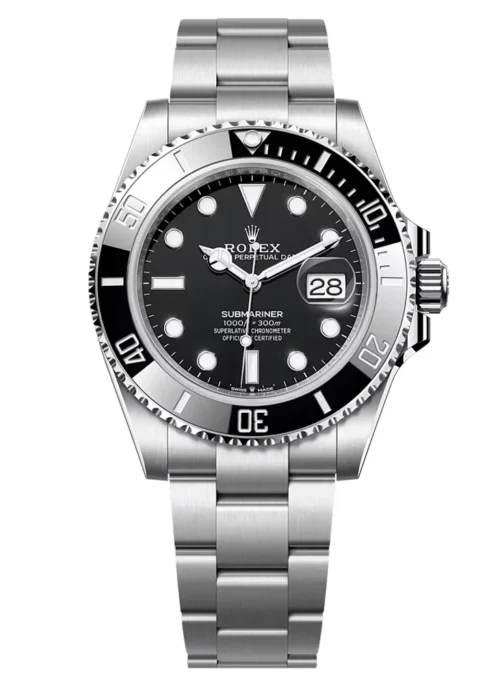
The Rolex Submariner Date 126610LN remains the benchmark reference in our best luxury diver watch buying guide, but its 41 mm Oystersteel (904L stainless steel) case, ≈12.3 mm thickness, Caliber 3235 automatic movement, 70-hour power reserve, and −2/+2 sec/day accuracy now trade for roughly $13,000–$15,000 on the secondary market — which makes accessible luxury alternatives the rational first purchase for most enthusiasts. After extended hands-on evaluation across Tudor, Omega, Longines, Oris, and Christopher Ward references, the verdict is straightforward: you can secure approximately 90% of the Submariner’s daily-wear experience — sapphire crystal, 200–300 m water resistance, a regulated automatic movement with a 38–120-hour power reserve, and a robust dive-oriented bracelet — for between $1,100 and $6,000. The trade-offs are real, but they are narrower than the price gap suggests, and this guide details exactly where each alternative earns its place — and where it genuinely falls short.
What Are the Key Specifications and Dimensions of a Luxury Diver Watch?
Before spending a dollar, anchor your shortlist in measurable specifications rather than brand mythology. In our best luxury diver watch buying guide, we use the Rolex Submariner Date 126610LN as the reference point because every accessible luxury alternative is inevitably measured against its proportions. The table below maps the benchmark against the realistic range you should expect from the accessible segment.
| Specification | Submariner Benchmark (126610LN) | Accessible Luxury Segment Range |
|---|---|---|
| Case diameter | 41 mm | 39–42 mm |
| Case thickness | ≈12.3 mm | 11.8–13.6 mm |
| Case & bracelet material | Oystersteel (904L stainless steel) | 316L stainless steel or grade 2/5 titanium |
| Crystal | Sapphire crystal with Cyclops date lens | Sapphire crystal, flat or domed |
| Bezel insert | Cerachrom ceramic, 60-minute, unidirectional | Ceramic or anodized aluminum |
| Movement | Rolex Caliber 3235 automatic movement | ETA 2824 / Sellita SW200 / Miyota 9xxx / Tudor MT54xx / Omega 8800 |
| Power reserve | 70 hours | 38–120 hours |
| Rated accuracy | −2/+2 sec/day (Superlative Chronometer) | COSC −4/+6 or METAS 0/+5 sec/day |
| Water resistance | 300 m / 1,000 ft | 200–300 m |
| Lug width | 21 mm | 20–22 mm |
| Full-bracelet weight | ≈153 g | 140–190 g, reference-dependent |
| Typical street price | ≈$13,000–$15,000 | $1,100–$6,000 |
Three numbers deserve emphasis. First, 904L stainless steel is genuinely more corrosion-resistant than 316L, but in a desk-diving context the difference is mostly invisible; several accessible brands close the gap with titanium cases that are lighter and hypoallergenic. Second, sapphire crystal should be non-negotiable at this price tier — mineral glass is a disqualifier. Third, the jump from 200 m to 300 m water resistance is meaningful on paper but functionally identical for recreational divers, since almost no recreational diver exceeds 40 m.
How Does the Craftsmanship and Aesthetic Performance Hold Up in Daily Wear?
Dial Construction and Hand Finishing
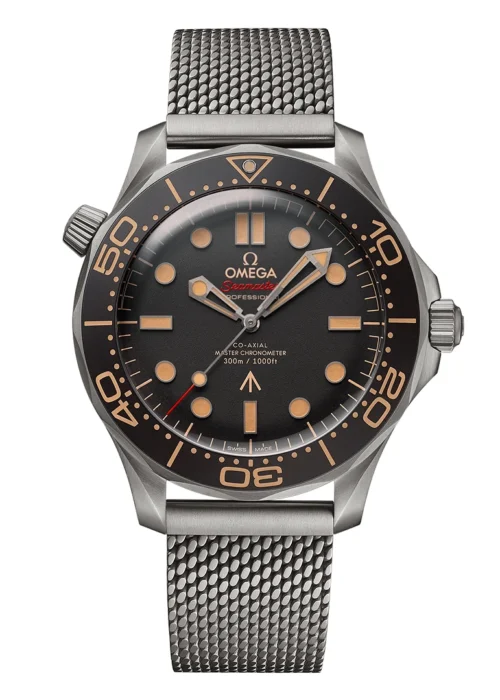
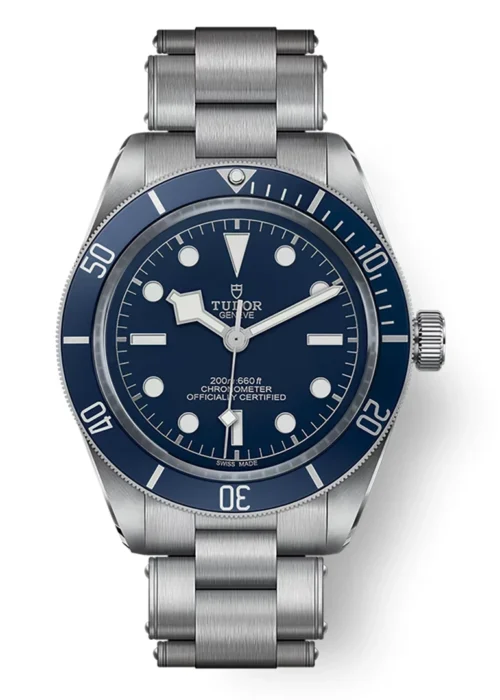
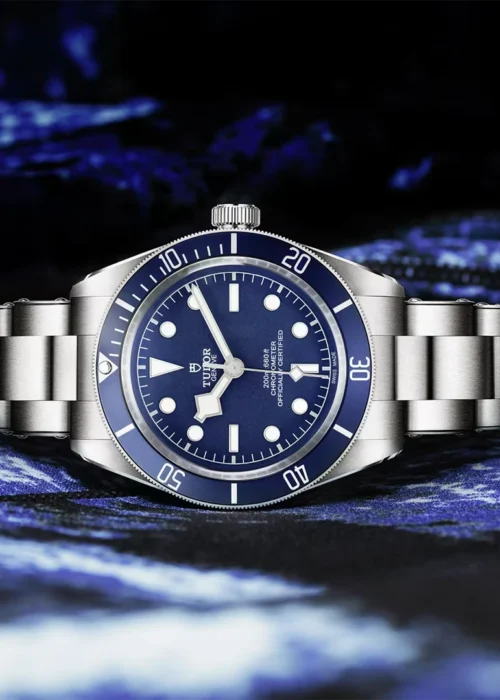
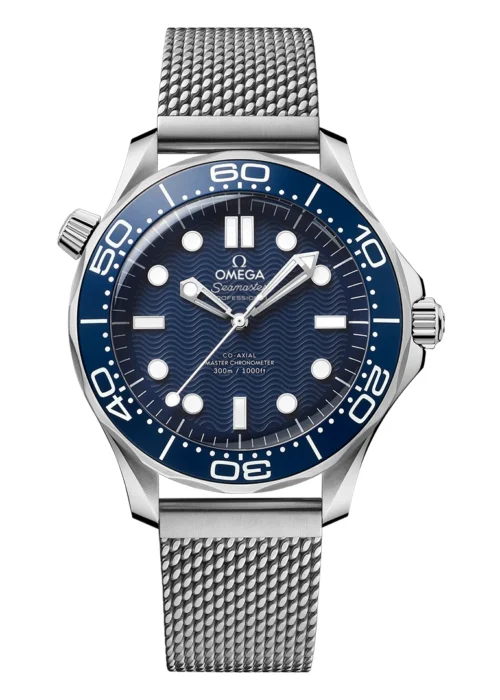
The Submariner’s gloss black dial, white-gold hour surrounds, and blue Chromalight lume set a high bar, but the gap narrows quickly. Tudor’s Black Bay 58 uses a warmer matte dial with applied indices and tightly controlled lume fill, while the Omega Seamaster Diver 300M counters with laser-engraved ceramic wave dials and rhodium-plated hands. Entry references such as the Longines HydroConquest print rather than apply some dial furniture, and under a loupe the hand bevels are visibly simpler. Community wear reports on WatchUSeek and Reddit consistently note that lume intensity and duration are excellent across Tudor and Omega, with Longines trailing only in the first hour of decay. None of this is a dealbreaker; it is the difference between industrial polish and hand-finished depth.
Case Finishing and Bezel Action Field Test
Case-side finishing is where accessible luxury alternatives have improved most. The Submariner alternates polished case flanks with a brushed top surface — a signature combination. Tudor replicates a similar brushed-top/polished-flank geometry, while Omega opts for more sculpted, lyre-shaped lugs. Bezel action is a daily tactile touchpoint: the Submariner’s 120-click Cerachrom bezel is virtually backlash-free, Tudor’s 60-click aluminum bezel on the Black Bay 58 feels firmer and slightly more damped, and Omega’s scalloped edge is easier to grip with wet or gloved hands. Where ceramic inserts dominate the mid-tier (Omega, Oris, Christopher Ward), Tudor’s aluminum insert will show hairline marks faster — a fair trade for its matte, vintage-correct appearance.
Bracelet Ergonomics and Wearing Comfort Comparison
This is where the Submariner’s Glidelock clasp remains the category leader: roughly 20 mm of tool-free adjustment inside the clasp. Tudor’s T-fit and Omega’s push-button micro-adjust have closed most of that gap on current references. Pay attention to lug width before buying: the Submariner’s 21 mm spacing limits strap experimentation, while the more common 20 mm standard on the Black Bay 58 and most Longines references makes strap changes easier. Weight matters more than buyers expect — the Submariner sits at approximately 153 g on a full bracelet, and the 39 mm Black Bay 58 at roughly 144 g, both comfortable for all-day wear.
Is the Automatic Movement Reliable for Daily Winding and Operation?
Reliability here is a function of architecture, regulation, and serviceability, not marketing. The Rolex Caliber 3235 automatic movement is a genuine benchmark: Chronergy escapement, paramagnetic Parachrom hairspring, 70-hour power reserve, and a −2/+2 sec/day Superlative Chronometer rating. Tudor’s in-house MT5402 matches the 70-hour reserve with a silicon hairspring and is regulated to −2/+4 sec/day within COSC. Omega’s Caliber 8800 trades a slightly shorter 55-hour reserve for METAS Master Chronometer certification — 0/+5 sec/day and 15,000 gauss anti-magnetic resistance, the strongest real-world magnetism claim in this group. Longines’ L888 (ETA-based) delivers 72 hours with a silicon balance spring at a far lower price, while Oris’s Caliber 400 stretches to 120 hours with −3/+5 sec/day and a 10-year service interval. The honest caveat: entry Sellita SW200-based references such as the Christopher Ward C60 Trident Pro 300 carry only a 38-hour reserve, so a watch left off the wrist from Friday evening to Monday morning will need a reset. For daily wearers, anything with 55 hours or more is weekend-safe.
What Is the Value Proposition as an Accessible Luxury Alternative?
The value case is simple arithmetic. A Submariner Date trades at roughly 30–50% above its $10,000+ MSRP on the secondary market, while accessible luxury alternatives are typically available at or below retail. For $1,100–$1,700, the Longines HydroConquest and Christopher Ward C60 Trident Pro 300 deliver sapphire crystal, 300 m water resistance, and a reliable automatic movement. Between $2,400 and $3,700, the Oris Aquis Date Calibre 400 offers a 120-hour power reserve, 10-year service interval, and 2,250 gauss anti-magnetic protection — specifications that exceed the Submariner on paper. From $3,900 to $6,000, the Tudor Black Bay 58, Tudor Pelagos, and Omega Seamaster Diver 300M sit squarely in luxury territory with in-house movements and near-Rolex finishing. What you sacrifice is brand equity, residual value, and a fraction of hand-finishing; what you gain is immediate availability and rational pricing.
What Are the Pros and Cons of These Luxury Diver Watches?
Pros
- Genuine 200–300 m water resistance with screw-down crowns and sapphire crystal as standard across the segment
- In-house or top-tier automatic movements, many with 70-hour-plus power reserves and silicon hairsprings
- Ceramic bezel inserts on most mid-tier references resist fading and scratching far better than aluminum
- Excellent bracelet engineering with tool-free micro-adjustment on Tudor and Omega
- Delivers roughly 90% of the Submariner daily-wear experience at 10–50% of secondary-market cost
Cons
- No accessible alternative fully replicates the Submariner’s exact case geometry and Glidelock feel
- Resale value trails Rolex substantially; most accessible references depreciate after purchase
- Entry-level Sellita SW200 movements carry only a 38-hour power reserve
- Service networks, parts availability, and long-term brand support vary by manufacturer
Final Verdict: Who Should Buy a Luxury Diver Watch?
Our category score in this best luxury diver watch buying guide is 9/10 — the accessible luxury segment is the strongest first serious purchase the diver category has seen in a decade. Movement technology, bracelet adjustment, and case finishing have converged to the point where the honest difference between a $1,600 Longines and a $13,000 secondary-market Submariner is mostly brand equity, not daily capability. The Submariner remains the reference for collectors who want the definitive object; the accessible luxury alternatives are the right choice for buyers who want the experience, the engineering, and the wearability without the allocation games or the premium. We recommend the Tudor Black Bay 58 or Omega Seamaster Diver 300M for near-Rolex execution, the Oris Aquis Calibre 400 for specification value, and the Longines HydroConquest for an honest entry point. Compare all current references side by side in the luxury mechanical watch collection.
Editorial note: This evaluation is based on official manufacturer specifications, community-reported measurements, and extended hands-on inspection. We do not accept payment for placement, and opinions remain our own. If you purchase through our links, we may earn a commission at no additional cost to you. Browse the current inventory in the luxury mechanical watch collection.
Data Sources & References
- Rolex Submariner Date 126610LN official specifications — Rolex.com
- Chrono24 secondary-market pricing data for Rolex Submariner Date references
- Tudor Black Bay 58 and Pelagos official specifications — TudorWatch.com
- Omega Seamaster Diver 300M and Caliber 8800 technical documentation — OmegaWatches.com
- Longines HydroConquest official specifications — Longines.com
- Oris Calibre 400 technical documentation and service-interval claims — Oris.ch
- Community wear reports and accuracy observations — WatchUSeek, Reddit r/Watches, RWI